
Pyxichromis orthostoma: The Wetland Predator Built for the Kyoga Basin
Every aspect of Pyxichromis orthostoma's anatomy and behavior reflects an evolutionary history spent navigating beneath papyrus walls, lily continents, and submerged weed labyrinths. It is not a relic. It is a dominant apex predator explicitly engineered for the living wetlands of the Kyoga basin.
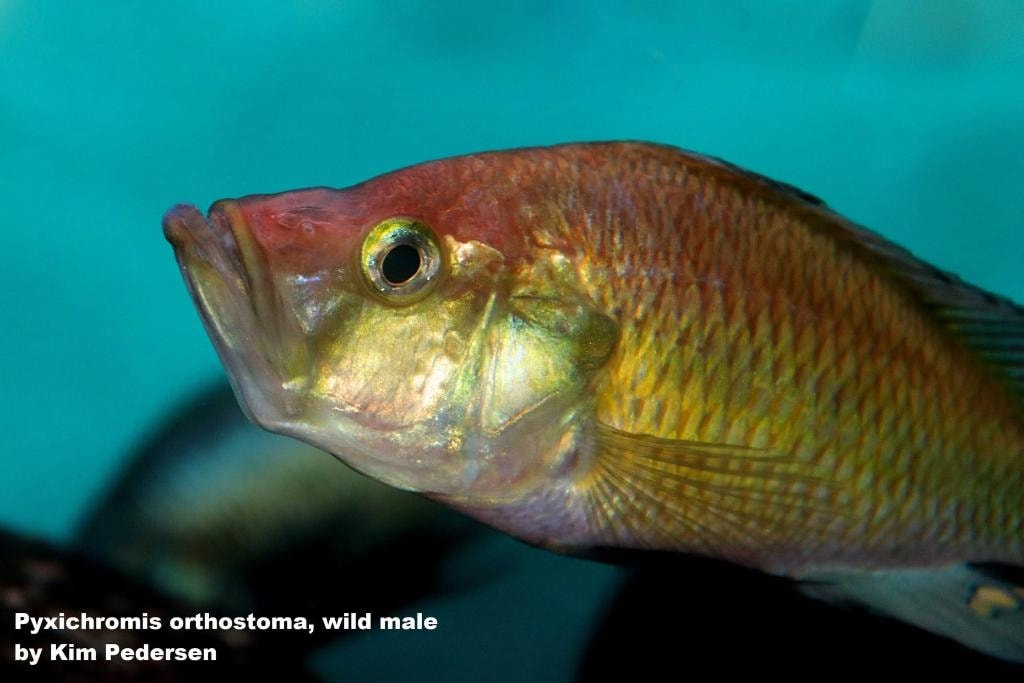
Pyxichromis orthostoma (Regan, 1922) is one of the most highly specialized ambush predators in the entire Lake Kyoga drainage basin of Uganda. It is a cichlid shaped entirely by shallow water, slow movement, and dense vegetation. Every aspect of its anatomy and behavior reflects an evolutionary history spent navigating beneath papyrus walls, lily continents, and submerged weed labyrinths.
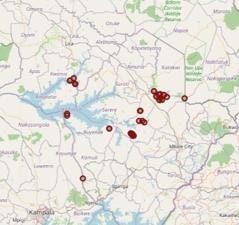
Rather than a fragile remnant population restricted to an isolated habitat, modern data from the National Fisheries Resources Research Institute (NaFIRRI) confirms that P. orthostoma operates as a widespread, successful basin-wide endemic. Its distribution spans the Eastern Bisina-Opeta complex — its historical type locality — the Central Satellite Swamp Network (Ngora, Pallisa, and Buyende), and the open riverine corridors where the Upper Victoria Nile empties into Lake Kyoga. Multiple wild field collections by Kim Pedersen and Joel Fogby demonstrated the species' stability long before institutional surveys officially aligned with what these collectors saw on the ground.
This modern picture also aligns with the historical chain of custody that brought P. orthostoma into the aquarium world. According to Les Kaufman, Julian Whitehead collected the species in Kyoga in the early 1990s and delivered it to Laif DeMason. DeMason then passed the fish to Kaufman, who has maintained a strong interest in the species ever since. That early lineage helped preserve P. orthostoma during a period when its true basin-wide distribution was still poorly understood.
The Anatomical Signature: Built to Strike Upward
The head of P. orthostoma is its definitive diagnostic hallmark. The entire cranial profile rises in a straight, completely uninterrupted 45-degree slope from the upper lip to the crown. Unlike its sister taxon Pyxichromis decticostoma, which features a prominent concave, "hooked" dip before the eyes, the snout line of P. orthostoma remains perfectly flat. This linear geometry is deeply hardwired, displaying absolute consistency from a 19-day-old post-yolk fry up to fully mature adults.
This distinct slope positions the mouth perfectly for an upward strike. The lower jaw is highly prominent, muscular, and projects noticeably past the upper lip. The surrounding skin at the jaw hinge is remarkably elastic, allowing the oral cavity to balloon outward instantly when a strike is initiated. This physical expansion fires a sudden negative-pressure vacuum that pulls unsuspecting prey straight down from the underside of floating plant mats. Small surface-dwelling cyprinids, insects, and micro-crustaceans living in the thin world between the water and the sky are its natural targets. P. orthostoma is not a wide-open water hunter; it is a highly adapted surface-layer specialist.
Visual Signaling in Dappled Light
The species displays striking sexual dimorphism, utilizing color palettes optimized specifically for the filtered, shifting light conditions of the Kyoga wetlands.
Dominant males showcase a dramatic "Ruby Cap" breeding dress, igniting in a deep, fiery crimson across the snout, forehead, and nape. Below this red mantle, the cheeks and flanks display a highly reflective, metallic brass-gold to emerald-green sheen that shimmers in dim water columns.
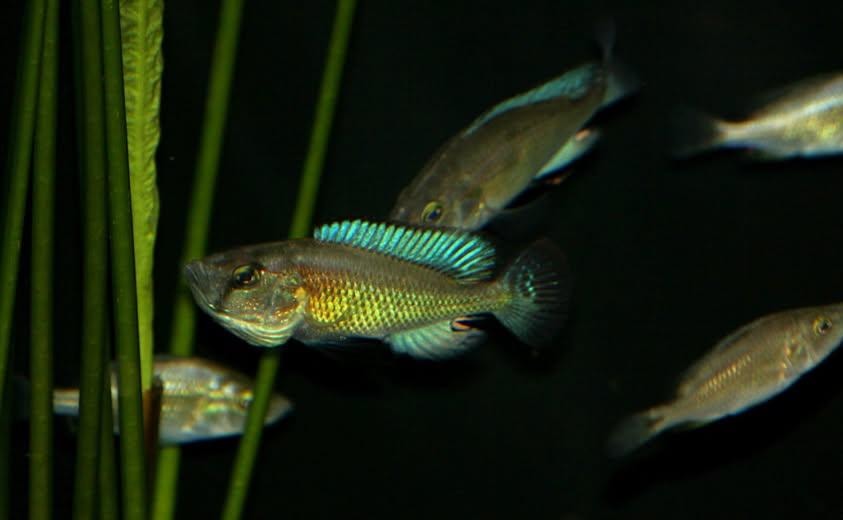
Sub-adult males carry a muted, smoky charcoal cranial mask but develop a brilliant, highly iridescent ice-blue to turquoise flare across the entire dorsal fin. This structural color acts as a high-visibility visual flag designed to pierce through murky water and dense reed stocks.
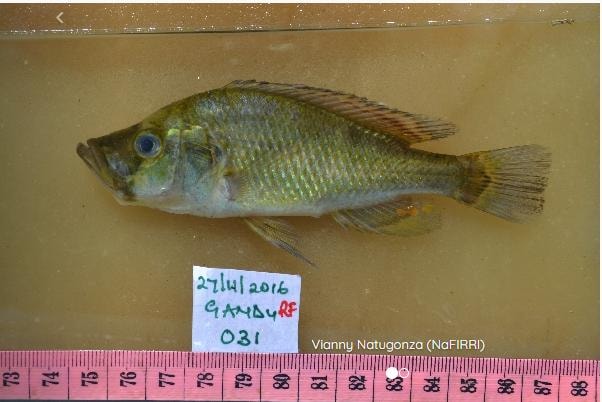
Females wear an elegant, highly functional cryptic camouflage. Their lateral flanks flash a brassy-olive to gold sheen, accented by soft violet-blue tones along the lower abdomen and caudal peduncle. The anal fin is a clean, uniform mustard-yellow, completely lacking the circular egg dummies (ocelli) found on males.
A Note on Hybridization
Kaufman has observed that male P. orthostoma are unusually active hybridizers. In one of his laboratory tanks, a male successfully bred with a female red-back scraper. This behavior reinforces the species' aggressive reproductive drive and highlights the importance of strict colony management in captivity. It also underscores the evolutionary plasticity that can emerge in wetland predators when territorial boundaries collapse in artificial environments.
Closed-Room Husbandry and Colonial Layout
Successfully keeping and preserving a wild P. orthostoma lineage in captivity requires recreating the precise structural dynamics of the habitat evolution designed for them.
Colony Structure and Aggression Control
Due to intense, unyielding conspecific male aggression, mature males cannot coexist peacefully in standard layouts. Harem management is a strict requirement for long-term stability. Maintaining at least three to four females per single alpha male is essential to safely dilute courtship chasing and territorial stress across the group.
Tank Furniture and Aquascaping
An open, bare aquarium fails to support the instincts of an ambush predator, driving up stress and triggering fights. The aquascape must echo the wetland landscape.
Branching driftwood recreates the dense, subterranean web of papyrus roots. These wood networks provide narrow fissures and overhead cover where sub-adults and holding females can safely retreat out of the male's direct line of sight.
Large visual rock barriers are vital to break up longitudinal tank sightlines. These rocks provide the structural anchors beneath which sexually mature males will execute extensive excavation behaviors, digging massive pits down to the glass or carving out deep caves to serve as their spawning arenas.
Thick floating plants recreate the dim, dappled lighting of the Kyoga satellite lakes. These mats offer a natural canopy, providing immediate mid-water security for recovering females and necessary hunting structures for free-swimming fry.
Hydrodynamics and Water Maintenance
Because the native catchments consist of slow-moving marshes, the water current inside the enclosure must remain modest and gentle. High-powered powerheads or intense, turbulent currents destroy the fish's motionless ambush posture, forcing them into a constant swimming struggle.
Because their high-protein diet creates a substantial biological load, a consistent waste export routine is mandatory to safeguard low-nitrate conditions. A water change of at least 20% per week is essential to preserve water quality without creating the disruptive currents that shatter the peace of their marsh-like home.
Reproduction, Maternal Care, and Rearing
Spawning follows the classic maternal mouthbrooding pattern common to the cichlids of the Victorian Basin. At a standard baseline facility temperature of 78°F (25.5°C), the complete gestation timeline spans up to 22 days.
The Stripping Protocol and Female Recovery
To maximize fry yields and prevent accidental brood loss within a community setting, brooding females should be caught and stripped of their fry at exactly day 15. At this milestone, the larval yolk sacs are fully absorbed and the fry are free-swimming visual predators.
Because mouthbrooding females practice absolute fasting while holding, they experience severe muscle wasting and physical exhaustion. Re-releasing a freshly stripped female directly back into the alpha male's territory introduces an immediate threat of sequential pregnancies, which can trigger terminal starvation. Stripped females must be moved immediately to a dedicated, low-stress recovery tank and fed heavily to rebuild body mass before being rotated back into the main breeding harem.
Nutritional Conditioning Regimen
While highly opportunistic feeders that accept most quality aquarium fare, conditioning females for successful spawning requires a specialized whole food diet. The colony should be fed exactly five times per week to ensure complete gastric clearance and prevent fatty degeneration of reproductive organs, prioritizing a rich protein rotation:
- Whole krill supplies vital structural chitin for intestinal health and is packed with natural carotenoids that boost tissue coloration and egg yolk quality.
- Mysis shrimp is full of crucial amino acids and highly unsaturated fatty acids (HUFAs) necessary to drive proper ovarian development.
- Blackworms (live or frozen) provide dense, easily digestible lipids that allow spent females to rapidly rebuild critical body mass during recovery.
Specialized Fry Rearing
Pyxichromis orthostoma fry hunt with specialized macro-gnathic efficiency from the moment they are free-swimming. Their grow-out pipeline requires targeted feeding and enhanced water care.
Rearing must lead with active, moving live foods — live or frozen baby brine shrimp (Artemia nauplii), microworms, and fresh daphnia — to trigger their predatory strike response. In tandem, introducing crushed high-quality flake foods early broadens their nutritional base and trains them to accept prepared diets. As their gape width expands, they transition smoothly onto high-protein sinking pellets.
Because growing piscivore fry must be fed multiple times per day, their grow-out blocks accumulate dissolved organic wastes and growth-inhibiting hormones at an accelerated rate. To maintain maximum growth velocity and prevent physical runting or mass die-offs, fry tanks demand a significantly more aggressive water changing regimen of at least 30% per week.
Pyxichromis orthostoma is not a relic, a remnant, or a fragile escapee of ecological change. It is a fully realized, dominant apex predator explicitly engineered for the living wetlands of the Kyoga basin. Its striking anatomy, brilliant color signals, behavior, and broad distribution all tell the same cohesive story: a masterpiece of natural selection thriving perfectly in the world evolution designed for it.


