Harpagachromis vonlinnei: Beyond the Mwanza Blueprint
For years, Haplochromis vonlinnei was known almost exclusively through a narrow window: the slender, striped sub-adult form described from the southern Mwanza Gulf. When the full basin is examined, the species reveals itself as a resilient, shape-shifting predator with distinct regional phenotypes and a powerful adult morphology.
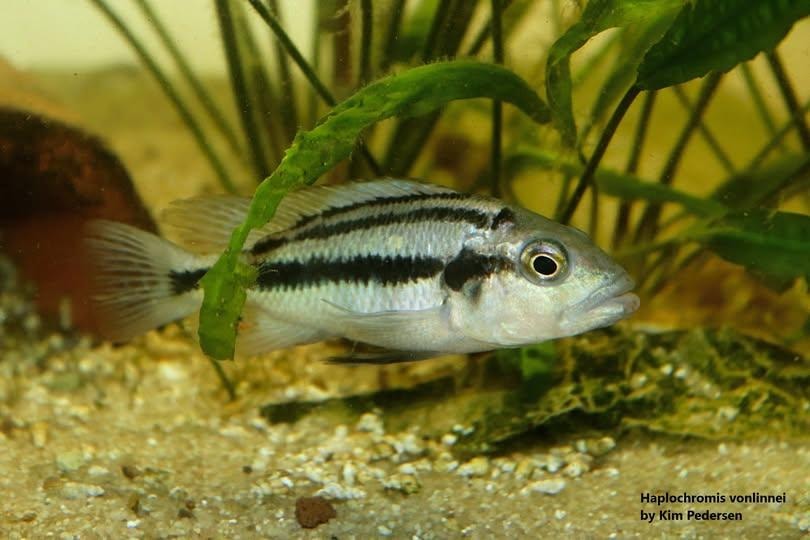
For years, Haplochromis vonlinnei was known almost exclusively through a narrow window: the slender, striped sub-adult form described from the southern Mwanza Gulf. This pencil-shaped juvenile became the species' public identity. It appeared in books, circulated through the hobby, and was treated as the definitive phenotype.
The lake itself tells a different story. See also the Harpagachromis vonlinnei species entry in the directory and its CARES listing.
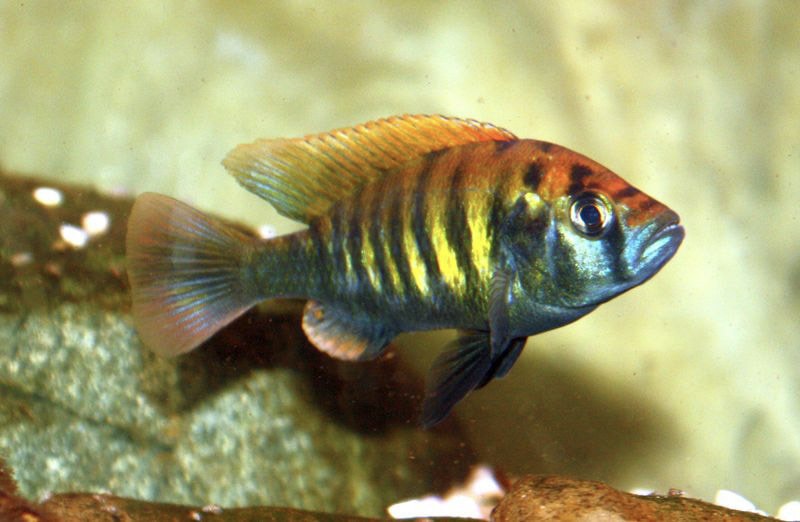
When mature wild adults from the western basin are examined, the traditional blueprint collapses. Vonlinnei is not a streamlined juvenile. It is a powerful, heavy-bodied apex predator that undergoes a dramatic transformation as it grows. The familiar parallel stripes belong to sub-adults. The adult fish is a deep-bodied, muscular hunter with regional phenotypes shaped by habitat, turbidity, and prey availability.
The Mwanza Island Complex: The Adult Blueprint
In the rocky island chains of the Mwanza Gulf — especially around Juma and Chamagati — mature males exceeding 140 mm standard length bear little resemblance to their juvenile form. As they reach full size, they deepen significantly in the body and develop a broad, muscular thoracic region. Dominant males flush with intense flank melanism when holding territory. This mask-like coloration obscures the parallel stripes entirely, replacing them with dark vertical barring that signals territorial control.
The classic textbook phenotype is not wrong. It is simply incomplete. It represents a developmental stage, not the adult fish.
The Kagera River Delta: The Turbid-Water Variant
Hundreds of kilometers northwest, near the mouth of the Kagera River, vonlinnei encounters a very different environment. Thick suspended sediment reduces visibility to near zero. Field survey logs — including specimen number 165260 — document a population adapted to this turbidity. Their eyes are smaller, and the preorbital sensory apparatus is expanded and highly developed. Their mid-lateral markings lose the clean linear uniformity seen in clearer water and instead form a heavy, irregular pattern suited to the murky riverine matrix.
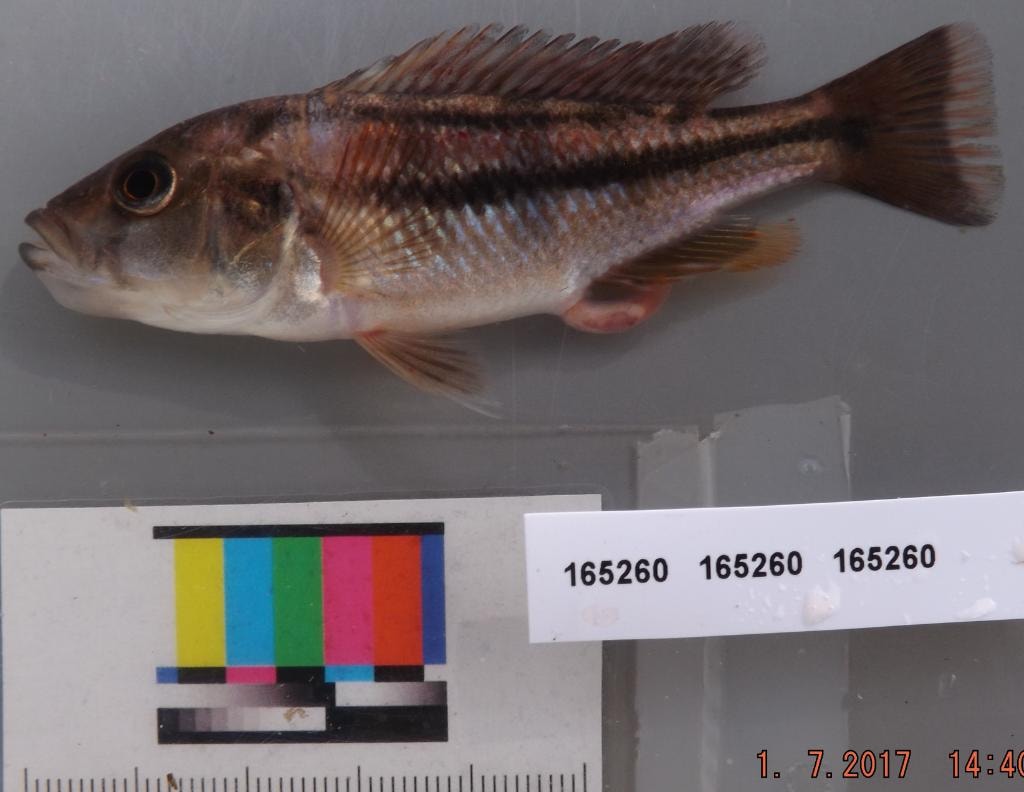
This is not a separate species. It is vonlinnei responding to a different sensory world.
The Juma Lineage: The Global Genetic Anchor
Because the Kagera Delta form has never entered the aquarium trade, the Juma Island lineage stands as the global genetic anchor for the species. In the wild, vonlinnei is built for swift ambush strikes on smaller rock-dwelling cichlids. Its high-performance predatory metabolism makes maternal mouthbrooding demanding, and dominant males lose their juvenile stripes entirely under territorial melanism.
In captivity, maintaining the lineage requires disciplined genetic management. Preservation networks maintain multiple closed-loop bloodlines from the Juma complex. Broods are stripped at approximately day fifteen, just as fry absorb their yolk sacs and develop functional hunting mouthparts. This approach bypasses captive bottlenecks and ensures that robust wild-type genetics remain available to priority breeders.
A Living Rebuttal to the Extinction Narrative
Vonlinnei is a case study in how narrow sampling created false species concepts across the Victorian radiation. When the lake is viewed only through oversampled southern bays, vonlinnei appears to be a slender juvenile form. When the full basin is examined, the species reveals itself as a resilient, shape-shifting predator with distinct regional phenotypes and a powerful adult morphology.
Vonlinnei demonstrates that absence of evidence is not evidence of extinction. It is proof that Lake Victoria's biodiversity did not collapse. It was simply misrepresented by limited sampling. When the true diversity of the basin is examined, vonlinnei stands as a survivor — not a relic.