Commentary
The Lake That Slipped Through the Cracks
Unlike Tanganyika and Malawi, Lake Victoria has no Konings. The people who know the system best operate within academic cultures where sharing identifications outside of formal papers is seen as premature or professionally risky.
The Lake That Slipped Through the Cracks
Anyone who has spent time in the world of African cichlids eventually discovers a strange asymmetry. The great tectonic Rift Lakes, Tanganyika and Malawi, are exhaustively documented. Their species are photographed, described, debated, revised, and republished in a steady stream of books, field guides, and hobbyist literature. Much of that clarity exists because of one person: Ad Konings. And it is important to describe him accurately.
Although Konings works outside the university system, he is a fully legitimate taxonomist by every standard that matters in modern ichthyology. He publishes formal species descriptions in peer-reviewed journals, follows the ICZN rules meticulously, and deposits holotypes in major natural history museums. His work is cited, respected, and used by academic ichthyologists worldwide. In taxonomy, legitimacy comes from rigor, output, and peer acceptance — not from an institutional job title — and Konings meets those criteria without qualification.
Where Konings differs from university-based taxonomists is not in rigor, but in structure. He finances his own expeditions, publishes through Cichlid Press, and answers to readers rather than grant committees. He has no teaching load, no departmental obligations, and no institutional politics to navigate. That independence allows him to spend thousands of hours underwater, documenting species in situ with a consistency that few university-based taxonomists can match. His books and photographs form a living, publicly accessible archive of Tanganyika and Malawi biodiversity. In a field where many species remain known only from museum drawers, Konings has made two entire lakes visible.
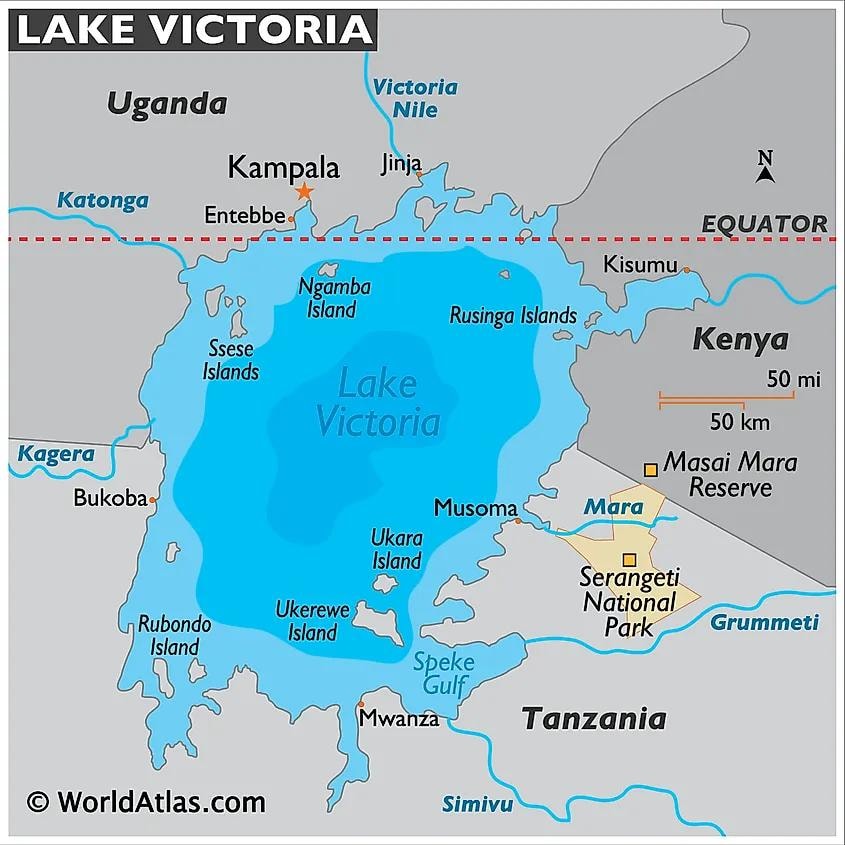
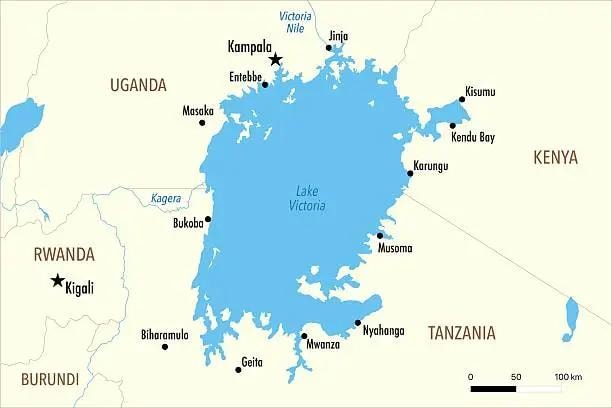
Lake Victoria is not a Rift Lake. It is a shallow, young, broad basin perched on the plateau between the western and eastern branches of the Rift. And yet it contains the most explosive vertebrate radiation on Earth — hundreds of species, many of them ecologically specialized, morphologically distinct, and evolutionarily fascinating. But unlike Tanganyika and Malawi, Victoria has no Konings. The people who know the system best — Ole Seehausen, Les Kaufman, and a handful of others — operate within academic cultures where taxonomy is secondary to evolutionary theory, and where sharing identifications outside of formal papers is seen as premature or professionally risky. Their knowledge is real, deep, and authoritative. But it is not public.
The result is a kind of epistemic paralysis. Hobbyists, conservationists, and even younger researchers are left navigating a fog of misapplied names, inconsistent survey labels, and photographs that cannot be trusted without independent verification. The mass extinction narrative is repeated uncritically. Species concepts drift. Field identifications contradict each other. And the only people who could resolve the confusion either do not publish their conclusions or actively discourage their dissemination. Victoria is not unknowable — it is simply unshared.
This blog is the beginning of a series that aims to change that. Not by attacking anyone, and not by pretending to replace the scientists who built the field, but by articulating the reality that every serious Victorian keeper already knows: the lake deserves transparency. The hobby deserves stability. And the world deserves access to the extraordinary diversity that has been hidden behind academic walls for far too long.