Ecology
Lake Edward: Why a Quiet Rift Valley Lake Belongs in the Victoria Basin Story
Lake Edward is rarely mentioned in hobby writing, seldom photographed, and almost never discussed in the context of the Victoria Basin. Yet it is one of the most important lakes in the entire region, and it plays a central role in understanding the evolutionary and ecological story that surrounds Victoria.
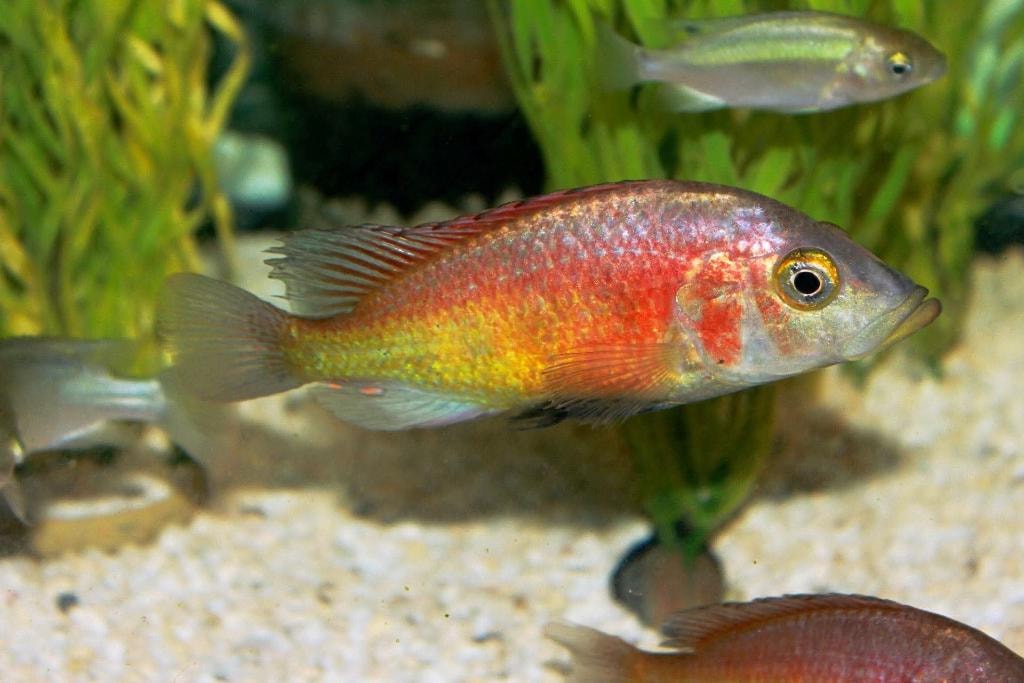
Most aquarists who follow East African cichlids know the names of the great lakes by heart. Victoria dominates the imagination, Tanganyika commands the scientific literature, and Albert carries the mystique of the Rift. Lake Edward, however, often sits outside the circle of familiarity. It is rarely mentioned in hobby writing, seldom photographed, and almost never discussed in the context of the Victoria Basin. Yet Lake Edward is one of the most important lakes in the entire region, and it plays a central role in understanding the evolutionary and ecological story that surrounds Victoria.
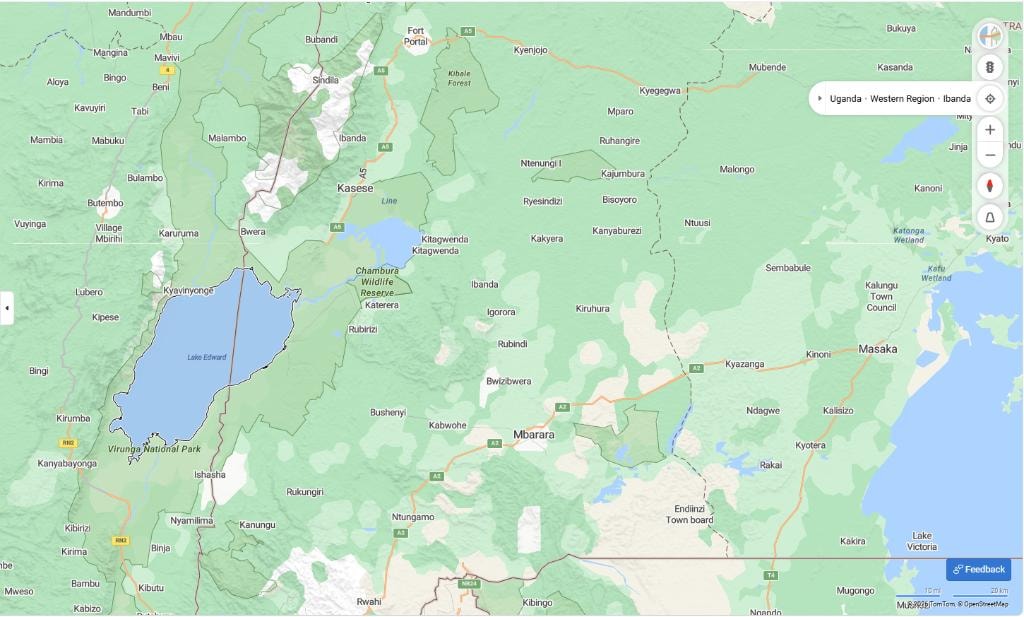
To appreciate why Edward matters, it helps to begin with geography. Lake Edward lies to the west of Victoria, tucked into the Albertine Rift where Uganda meets the Democratic Republic of Congo. It is smaller than Victoria, but it is deep, clear, and ecologically rich. It connects directly to Lake George, and together they form a single ecological system that drains northward into Lake Albert. This places Edward inside the larger Nile drainage, and therefore inside the same evolutionary corridor that shaped the Victoria superflock.
The Victoria Basin is not defined only by Victoria itself. It is a network of lakes, rivers, swamps, and geological corridors that share a long evolutionary history. Species move through these corridors. Lineages split and reconnect. Guilds evolve, disappear, and reappear. The Basin is a living web, not a single lake. Edward is part of that web. It is one of the western anchor points of the system, and its cichlids carry the genetic and ecological signatures of the same radiation that produced the Victorian flocks.
This is why Edward belongs in this project. It is not an outsider. It is a sister lake, shaped by the same forces, connected by the same river systems, and home to many of the same trophic strategies that define the Victoria radiation. When we study Edward, we are not leaving Victoria behind. We are expanding the frame to include the full evolutionary landscape.
Edward also matters because it has been studied with a level of rigor and continuity that Victoria has not enjoyed in recent decades. The Belgian and Dutch research tradition, carried forward by Jos Snoeks and Nathan Vranken, has produced a modern, coherent, and richly detailed picture of Edward's cichlids. This work includes formal species descriptions, ecological notes, and complete guild analyses. It is one of the most successful freshwater research programs in Africa, and it has given us a clear view of how a Rift Valley lake can be understood when long-term scientific attention is sustained.
Vranken's paedophage study is a perfect example. His paper, published in Hydrobiologia in 2019, revealed that the Lake Edward system contains not one but five paedophagous Haplochromis species. This discovery reshaped our understanding of predatory guilds in the Albertine Rift and provided a rare glimpse into the evolutionary pressures that shape mouthbrooding behavior. Readers who want to explore this work can find it here:
Vranken, N. et al. (2019). Grasping ecological opportunities: not one but five paedophagous species of Haplochromis (Teleostei: Cichlidae) in the Lake Edward system. Hydrobiologia, 832(1), 105–134. https://doi.org/10.1007/s10750-018-3742-5
This kind of research is not only valuable for Edward. It illuminates the entire Victoria Basin. It shows how trophic guilds evolve, how predatory strategies diversify, and how ecological opportunity drives radiation. It gives us a model of what Victoria could look like if its own research programs were revived and sustained.
For hobbyists who have never heard of Lake Edward, this is the moment to bring it into view. It is a lake that reveals the deeper story of the Basin. It is a lake that shows what careful science can achieve. And it is a lake whose cichlids, though less famous than their Victorian cousins, are every bit as remarkable.
This is why Edward belongs in this project. It is not a detour. It is a foundation stone. It helps readers understand the Basin as a whole, and it prepares them for the larger narrative that the subsequent blog posts will collectively deliver.