Ecology
The Paedophage Guild of the Victoria Basin
Predators of the unborn: the evolution, persistence, and quiet survival of a specialized guild of cichlids that feed on the eggs and larvae of brooding females.
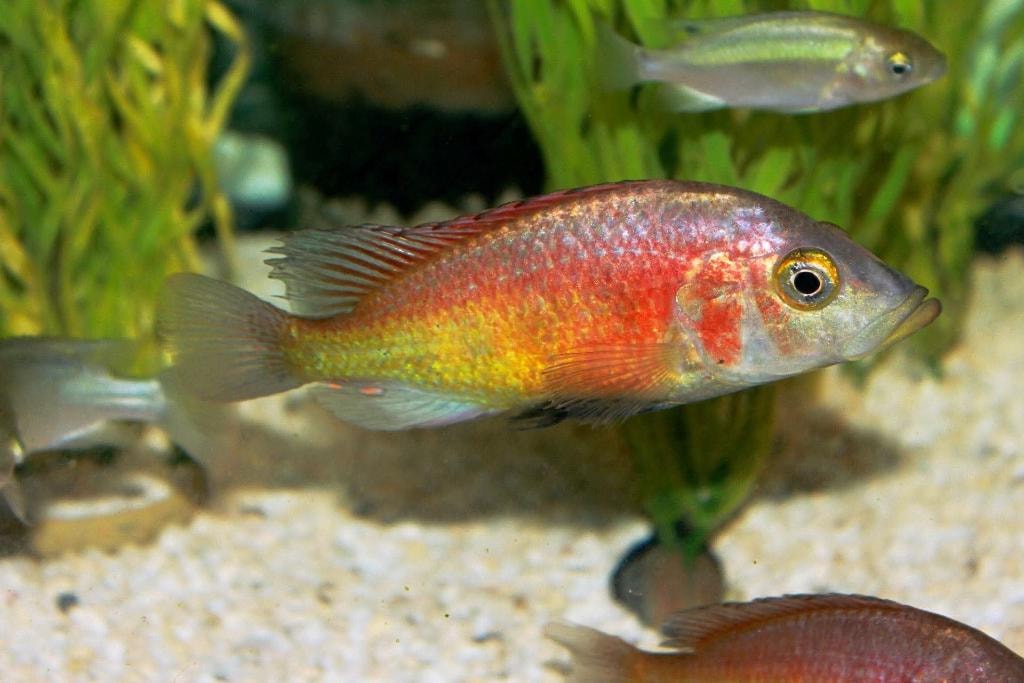
In the great tapestry of the Lake Victoria radiation, few ecological roles are as specialized or as misunderstood as paedophagy. These are the predators of the unborn — cichlids that feed not on adults, nor on free-swimming juveniles, but on the eggs and larvae carried inside the mouths of brooding females. It is a strategy that requires precision, speed, and a deep evolutionary commitment to a narrow niche. In the Victoria Basin it produced a small but remarkable guild of species whose lives were shaped by the reproductive biology of others.
Paedophages are not simply egg eaters. They are behavioral tacticians. They read posture, tension, and hesitation. They track the subtle cues of a holding female. They strike with timing measured in fractions of a second. Their entire evolutionary identity is built around the vulnerabilities of maternal care.
Each species evolved its own method. Ram strikers hit the buccal cavity with force to provoke a release. Suction specialists engulf the head of a brooding female and strip the brood directly. Ambush hunters wait motionless until the moment of opportunity. Coordinated opportunists work in loose groups, taking advantage of distraction and movement.
These strategies are not interchangeable. They are the product of millions of years of evolutionary refinement. They were also among the first behaviors to shift when the Nile perch arrived, because brood predation depends on stable territories, predictable breeding cycles, and abundant mouthbrooding prey. When those foundations changed, the paedophages changed with them.
The paedophages were affected not because they were eaten or eliminated, but because the behavioral and territorial structure of the basin changed. Brooding females became less frequently observed. Territories were disrupted. Breeding cycles no longer followed the patterns described in the early literature. In truth we do not know what happened to the paedophages in numerical terms. There were no systematic surveys before the perch and none immediately after. Collection methods were biased toward conspicuous rock dwellers and commercial species and against the very predators this article describes. With no before-and-after data we can assert nothing about losses or survival. What we can say is that later work — including the NaFIRRI survey of 2016 and the 2017 survey — demonstrates that the paedophages and many other haplochromines were still present. The narrative of a basin-wide wipeout by the Nile perch is not supported by evidence.
The four paedophages covered here represent less than half of the paedophages currently extant in the Victoria Basin. They were selected for specific reasons, and each of the remaining paedophages is either covered elsewhere or will be covered in future articles. The guild is larger than these four species and remains one of the most diverse and least understood components of the Victorian radiation.
Lipochromis parvidens
The Benchmark Paedophage of the Napoleon Gulf
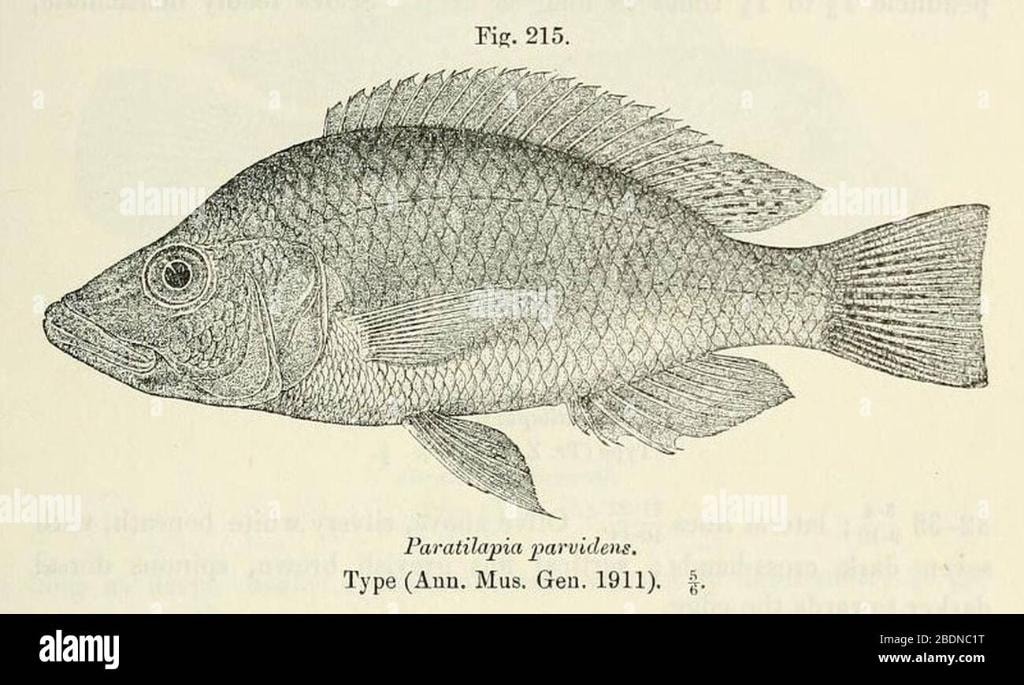
Lipochromis parvidens is the taxonomic anchor of the guild — the formally described paedophage whose morphology, behavior, and historical range define the niche. It is the species against which all others are measured, the one that appears in the literature, the one that survived long enough to be named.
Its historical range centered on the Napoleon Gulf, where it occupied a behavioral niche that required both precision and restraint. Unlike the ram strikers, which rely on force, parvidens is a suction stripper — a specialist that uses rapid buccal expansion to extract broods directly from the mouths of brooding females. This is not a generalized feeding strategy. It is a highly refined behavioral sequence that depends on timing, angle, and the ability to read the subtle cues of a holding female.
The morphology reflects this specialization. The head is deep and muscular, with a powerful suspensorium and a jaw apparatus capable of rapid expansion. The gape is wide enough to engulf the entire head of a brooding female, creating a vacuum that strips the brood in a single motion. The body is compact, built for sudden acceleration rather than sustained pursuit. The eyes are large and positioned to maximize binocular focus during the strike.
In captivity, parvidens may express the initial upward, vent-directed trigger strike even in the absence of brooding females — a partial motor pattern that resembles the ram strike of parvidens red but does not represent the full suction-stripper sequence.
In the wild, parvidens was a patient predator. It did not chase. It watched. It hovered at the edge of territories, waiting for the moment when a brooding female hesitated, shifted her posture, or revealed the slightest tension in her opercular rhythm. These cues — invisible to casual observers — were the signals that triggered the strike.
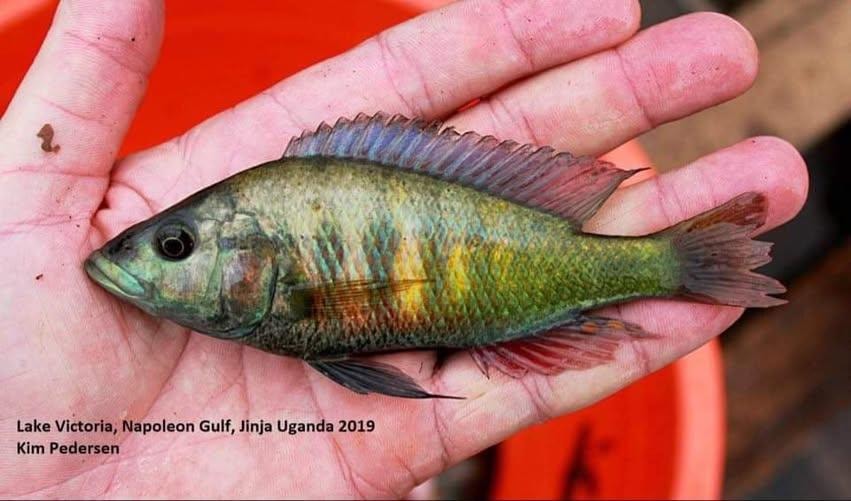
Parvidens was classified as extinct only because no one was looking for it and the methods used by exporters and researchers were not suited to detecting paedophages. The species reentered the record when Kim Pedersen and Joel Fogby collected a group in the Napoleon Gulf and brought them back to Denmark. Kim spawned them and sent a group of the wild adults to NECA, placing them in the hands of a small group of hobbyists. Some individuals went to Ole Seehausen, but the species has proven difficult to spawn and very few males have been produced. This has placed the captive population at risk despite the fact that the species persists in the lake. The modern captive lineage therefore reflects not a rescue from extinction but the challenges of maintaining a species whose reproductive biology is demanding and whose sex ratios in captivity have been difficult to stabilize.

In captivity, parvidens remains a model paedophage. It is alert, deliberate, and unmistakably specialized. Its behavior provides a clear view of the evolutionary pressures that shaped it, even though the broader ecological dynamics of the Napoleon Gulf remain insufficiently documented to draw conclusions about change.
Parvidens is not simply a species. It is the reference point against which all other paedophages are understood.
Lipochromis sp. "parvidens red"
The Nawampassa Paedophage Recovered Twice
For decades, the paedophage from Nawampassa was treated as a mere color variant of Lipochromis parvidens. Exporters labeled it parvidens red, hobbyists repeated the name, and even early institutional notes treated it as a population-level variant. But the fish itself never quite fit the template. Its behavior was wrong for parvidens. Its morphology was lighter and more streamlined. Its strike was not the controlled suction strip of the Napoleon Gulf species but a kinetic and force-driven ram.
It took years for the truth to emerge. The Nawampassa fish was not a variant. It was a distinct lineage — a ram-striking paedophage that had been hiding in plain sight under the wrong name.
Where L. parvidens is compact and muscular, built for suction, parvidens red is longer, lighter, and more angular. The head is narrower, the jaws less robust, the suspensorium less heavily reinforced. These differences reflect a fundamentally different predatory strategy. Parvidens red is a ram striker. It does not engulf the head of a brooding female. It hits her. The strike is a sudden and violent impact delivered to the buccal cavity, forcing the female to expel part of her brood. The predator then wheels back, collecting the scattered eggs or larvae before the female can recover. This strategy is riskier than suction stripping. It requires speed, precision, and a willingness to provoke retaliation. It is also effective in habitats where brooding females are more mobile and territorial boundaries less rigid.
In captivity the difference is unmistakable. While parvidens stalks and waits, parvidens red patrols aggressively, testing other fish, darting in and out of territories, and striking with a kinetic energy that feels almost reckless. It is a predator shaped by a different ecological rhythm.
The First Rescue: Michael Liu
The first salvation of parvidens red began with one aquarist, Michael Y. Liu. He first encountered the fish at a convention and brought a small group home simply because he liked them. They spawned occasionally, but not often, and for years the lineage survived only because Mike kept them alive when others could not. He shared fish with other hobbyists, but the groups either died or eventually returned to him, leaving Mike once again as the sole keeper of the line. He maintained the species through long stretches when it existed nowhere else in the hobby, keeping it stable through patience, persistence, and an interest that never faded.
The Second Rescue: Laif DeMason
After more than a decade of quiet stewardship, the second turning point arrived when Laif DeMason opened one of his ponds and released a large number of the Nawampassa fish for sale. No single hobbyist could have taken all of them, but Mike acquired a group, and that infusion of unrelated individuals expanded the genetic base and transformed the species' prospects. Spawning increased, redundancy grew, and the lineage finally stabilized. Today the species exists because Mike kept it alive through years of fragility and because Laif preserved it in his ponds long enough to provide the second line that secured its future.
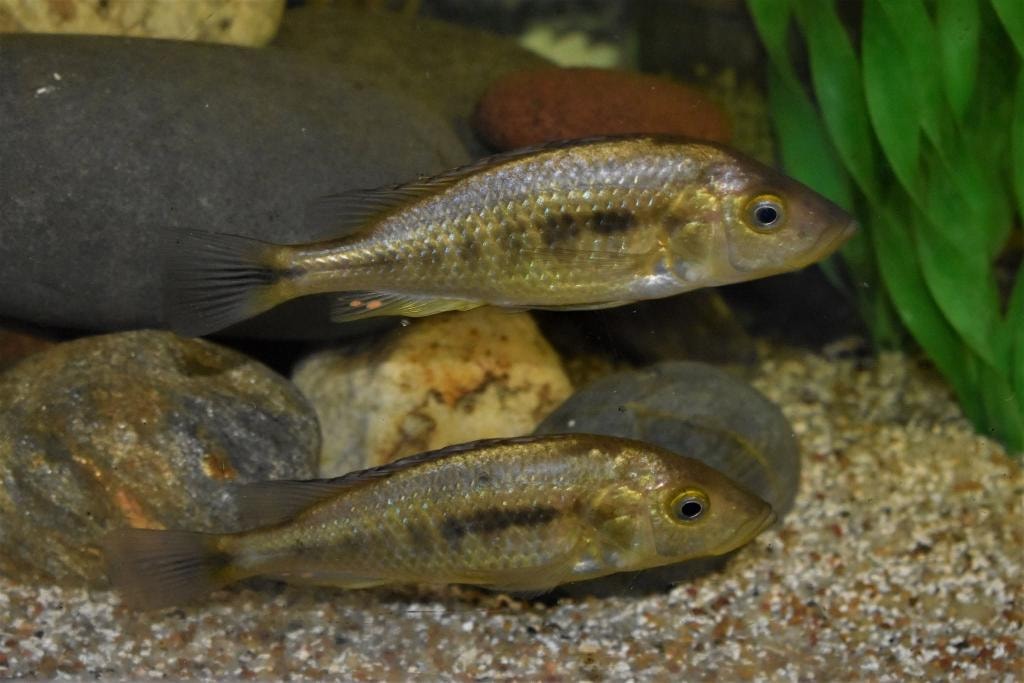
Although detailed field observations of the Nawampassa paedophage are limited, the broader collection record shows that this lineage was not confined to Nawampassa. It was collected throughout the Kyoga lake system and into the Upper Nile drainage. These are open and dynamic habitats where brooding females are more mobile and territorial boundaries less rigid. A ram-strike strategy makes sense in such a context — it is fast and disruptive and effective in situations where a brooding female cannot be cornered or stalked for long periods. The morphology of parvidens red, including its streamlined body, rapid acceleration, and lighter cranial structure, reflects this ecological reality.
Captive Behavior: A Keeper's Footnote
Michael Liu has observed parvidens red in mixed-species tanks long enough to document something that has never appeared in the literature. In his early years keeping the species, he watched them station themselves near the substrate when housed with other cichlids. When the tankmates fed, the parvidens red would position themselves at a nearly vertical angle — head up, eyes tracking — and then shoot upward in a ram strike against the feeding fish. There were no fry to intercept. The strike was directed at food particles, not a brood. The behavior was not random aggression; it was a precise, context-triggered response that appeared only in the presence of other species. Among themselves, parvidens red never exhibited it.
Liu also notes that he never witnessed an attempt to ram a holding female of another species — though he acknowledges that no other species may have been breeding in the tank at the time. Since the early years, he has kept the fish in a species-only tank. In early 2025, he introduced a group of Haplochromis thereuterion as tank companions. The thereuterion spawn regularly. The parvidens red have not attempted to ram any holding female.
Whether this reflects a genuine behavioral shift — the ram instinct attenuated through generations of captive breeding in the absence of brooding targets — or simply a difference in context, Liu cannot say. He raises the question himself: perhaps the behavior has been bred out. It is, as he notes, an interesting research topic, and one that only a keeper with decades of continuous observation could have posed.
The survival of Lipochromis sp. "parvidens red" is a testament to the power of distributed stewardship. It is a species that institutions overlooked, misidentified, and nearly lost, yet hobbyists preserved it through a combination of observation, persistence, and luck. Its significance lies in its distinct behavioral strategy, its evolutionary insight into brood predation, its dual survival narrative, and the genetic value of two independent lines. Today parvidens red stands as one of the most important paedophages in captivity — not because it is common or colorful, but because it embodies the fragility and resilience of the Victorian radiation.
Lipochromis melanopterus
The Precision Head Engulfer of Makobe
If parvidens is the benchmark and parvidens red the reconstructed lineage, then Lipochromis melanopterus is the archetype — the species that most clearly embodies the morphological and behavioral extremes of suction stripping.
Its head is a weapon: deep, muscular, and built for rapid expansion. The jaws open wide enough to engulf the entire head of a brooding female, creating a vacuum that strips the brood in a single motion. The suspensorium is heavily reinforced, the opercular bones broad and powerful, the gape enormous relative to body size. This is not a generalist predator. It is a specialist honed by millions of years of evolutionary pressure.
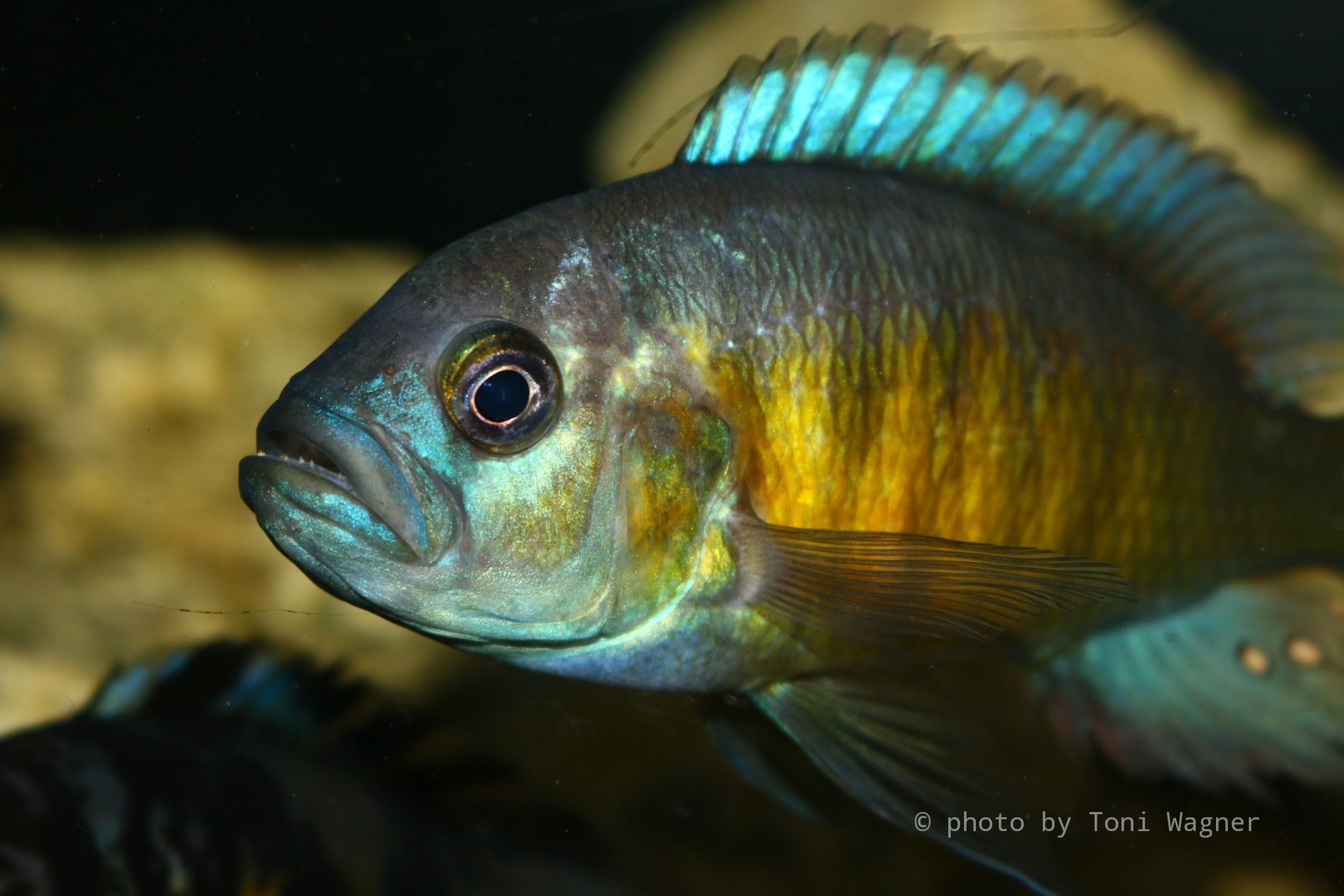
The Makobe Island population is the best documented and most widely kept. Its distinctive vertical barring, blue cranial iridescence, and sharply defined fin margins make it one of the most recognizable paedophages in the hobby. The survival of the Makobe lineage is tied to early export events in the 1980s and 1990s, when collectors brought a small number of individuals into Europe and North America. These fish formed the foundation of the modern captive population. Unlike some Victorian species, melanopterus did not benefit from widespread distribution. Its survival depended on a handful of dedicated keepers who maintained the line through periods of low interest and limited availability.
In captivity, melanopterus displays the full behavioral repertoire of a precision suction stripper. It stalks with slow, deliberate movement toward a brooding female. It aligns its head directly in front of the female's mouth. It expands its buccal cavity with astonishing speed. Even experienced observers often miss the moment of extraction, seeing only the aftermath — a startled female and a male swallowing the expelled brood. This behavior is not improvisation. It is a highly refined predatory sequence that depends on stable breeding territories and predictable maternal behavior.
The cranial morphology of melanopterus is among the most specialized in the guild. The head is deep and muscular. The opercular bones are broad. The suspensorium is massive. The gape is wide and capable of rapid expansion. The buccal cavity is enlarged. The body is streamlined for sudden acceleration. These features are not incidental. They are the anatomical foundation of suction stripping — a strategy that requires both power and precision.
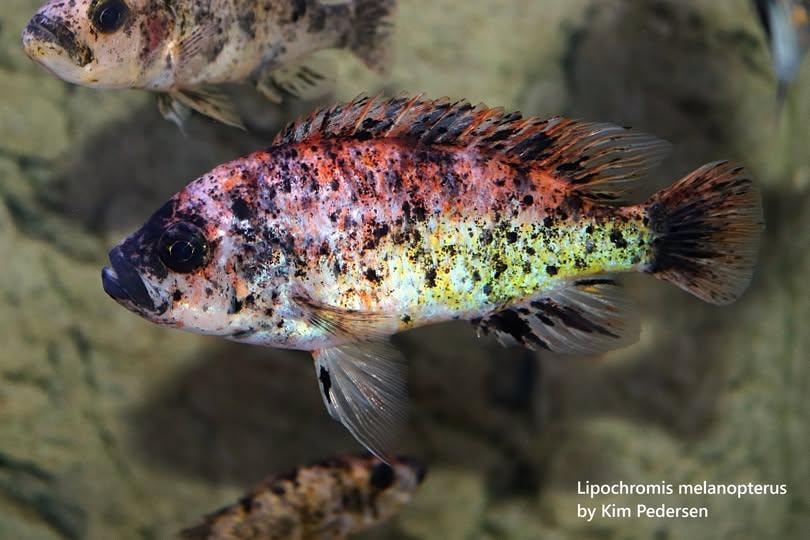
During the Lake Victoria Species Survival Program, melanopterus was one of the species that received early attention. One of the more interesting observations from the LVSSP era, later confirmed by keepers like Kim Pedersen, was the shift in OB frequency over time. Early captive populations showed relatively high OB expression, while later generations exhibited lower frequencies. This shift likely reflects founder effects, genetic drift, selective breeding, and small population sizes. These changes underscore the importance of maintaining multiple lines and avoiding bottlenecks in captive populations.
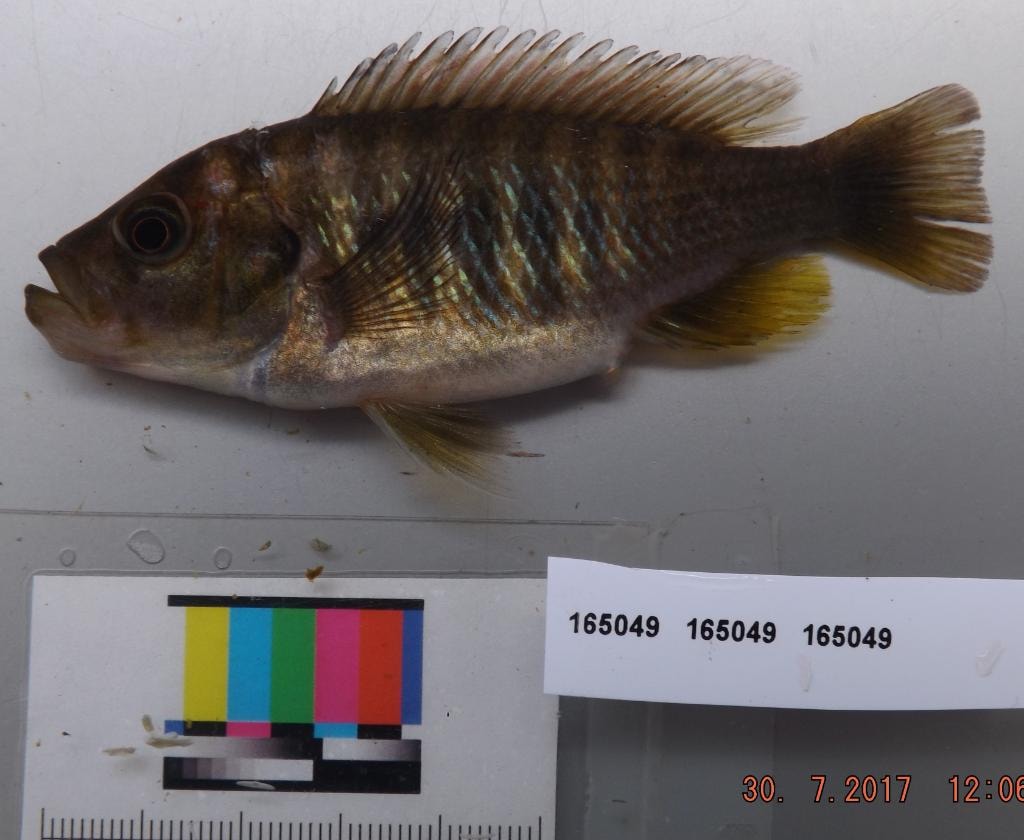
Lipochromis melanopterus is one of the most important paedophages in captivity. It represents the extreme end of suction-stripping specialization. Its cranial structure provides a clear reference for understanding paedophage evolution. Its historical continuity links modern captive populations to one of the best documented field sites in the Victorian Basin. Its narrow specialization makes it particularly vulnerable to ecological disruption. In many ways, melanopterus is the species that most clearly illustrates what was lost and what was saved during the Victorian collapse.
Lipochromis sp. "Matumbi hunter"
The Ambush Predator of the Mwanza Gulf
The Matumbi hunter stands apart within the paedophage guild of the Victoria Basin, shaped by an ambush-driven predatory style and a history that reflects both regional bottlenecks and continued persistence across parts of the lake.
Its elongated body, cryptic coloration, and alert, forward-tilted posture speak to a predator that does not chase so much as wait. It is a fish built for stillness — and for the explosive acceleration that follows.

The Matumbi hunter's morphology is immediately distinctive. The body is long and slender. The head is narrow. The jaws are less robust than those of suction strippers. The eyes are positioned to maximize forward focus. The fins are proportioned for sudden darting bursts rather than sustained pursuit.
Its behavior reflects this design. Unlike the patrolling strategies of parvidens or the kinetic probing of parvidens red, the Matumbi hunter prefers to remain motionless, often pressed against rock faces or nestled in crevices. It watches. It waits. It reads the water column for the subtle cues of a brooding female passing too close. When the moment comes, the strike is instantaneous — a short explosive lunge that startles the female into expelling part of her brood. The predator then wheels back, collecting the scattered eggs or larvae before the female can recover.
One of the most remarkable aspects of the Matumbi hunter's behavior — observed both in the field and in captivity — is its tendency to engage in coordinated hunting. While not true pack behavior in the mammalian sense, groups of Matumbi hunters will position themselves strategically around a brooding female, each waiting for an opportunity to strike. One individual may initiate a feint. The female reacts, shifting position or attempting to flee. A second individual takes advantage of the movement, delivering the true strike. A third may collect the expelled brood. This coordinated opportunism suggests a level of social awareness uncommon among Victorian predators. It also underscores the ecological pressures that shaped the species.
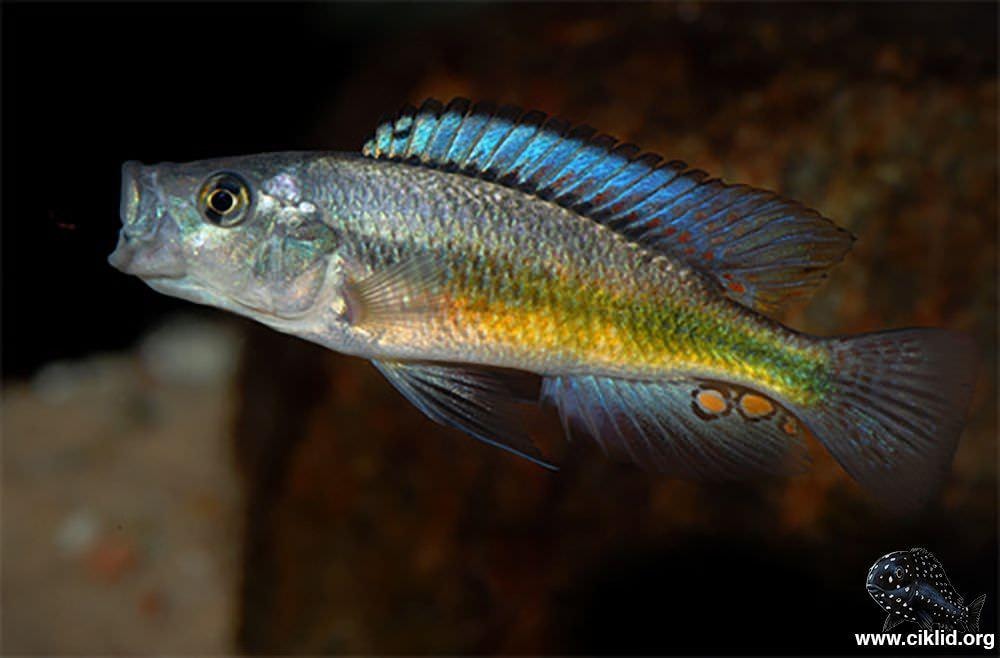
The Matumbi hunter persisted through ecological change in the basin. It passed through a genetic bottleneck in the Mwanza region, but it also appears to be doing well in the northwest of the lake. Until genomic work is completed on those populations, we cannot comment on long-term viability or stability. What we can say is that the species endured across multiple regions and continues to display the behavioral and morphological traits that define its niche.
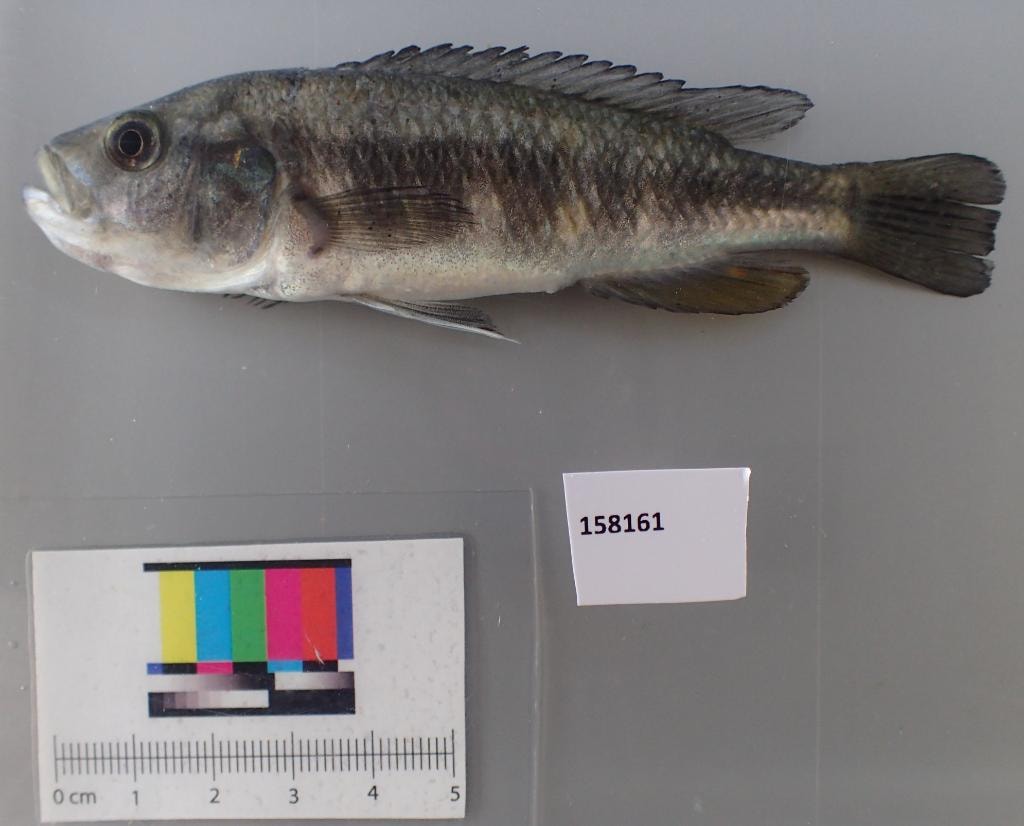
In captivity, the Matumbi hunter retains its ambush instincts. It prefers dimly lit areas, overhangs, and rock structures that allow partial concealment. It watches other fish with an intensity that borders on unnerving, tracking movement with subtle shifts of posture rather than overt motion. When kept with mouthbrooding species, the full behavioral repertoire emerges. Even in tanks without mouthbrooders, the species maintains its alert predatory posture. It is a fish that carries its ecological history in its bones.
The Matumbi hunter is significant not because it is rare, but because it represents a unique evolutionary experiment within the paedophage guild. Its ambush strategy, its coordinated hunting, its morphological distinctiveness, and its history of persistence across different regions of the lake make it a species of exceptional interest. It is a reminder that resilience and fragility often coexist. The Matumbi hunter survived when others did not, yet it did so by passing through a genetic crucible that left it permanently marked. Today its survival depends on the same distributed stewardship that preserved parvidens, parvidens red, and melanopterus — the quiet, persistent work of aquarists who recognize that every lineage matters.
Epilogue: A Guild Worth Saving
The paedophages of the Victoria Basin are not show fish. They are not brightly colored, nor widely kept, nor commercially important. But they are irreplaceable. They represent a behavioral strategy found almost nowhere else in the cichlid world. They embody the evolutionary creativity of the Victoria radiation. They remind us that even the most specialized predators can survive if someone is willing to care.
Their survival today is not the result of formal conservation programs, government initiatives, or institutional planning. It is the result of distributed stewardship — the quiet, persistent work of aquarists who recognized that every lineage matters.
The paedophage guild is more than a chapter in a book. It is a record of what was lost and what was saved. It is a testament to the power of community conservation. And it is a reminder that the future of Victorian cichlids will be written not by institutions, but by the people who keep them alive.