Commentary
The Paedophages That Rewrite Lake Victoria's History
Five paedophage species collected together in the northwest in 2017 represent every major strategy, every major morphological type, and every major behavioral specialization. This was not a remnant. It was a complete guild.
This article describes the reproductive predators of the lake. For the pursuit and ambush hunters, see the piscivore article. For the full ecological picture, see the predator‑radiation synthesis that links both guilds together.
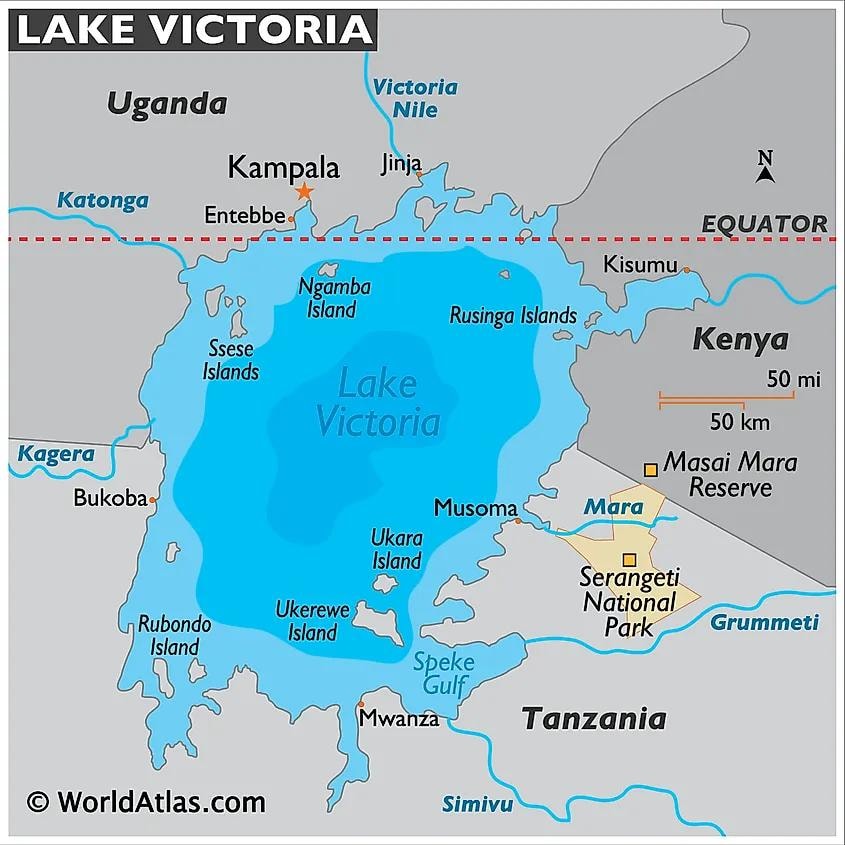
For decades, the story of Lake Victoria has been told as a tragedy: a catastrophic, lakewide collapse of the haplochromine radiation. The Mass Extinction narrative became scientific canon, built on the disappearance of predators, the loss of mouthbrooders, and the apparent vanishing of the lake's most demanding specialists, the paedophages. But that story was built in the wrong place.
Paedophages are the most demanding predators in Lake Victoria. They do not hunt adult fish, and they do not consume eggs. They hunt parental care itself. Their entire feeding strategy depends on mouthbrooding females being abundant, predictable, and behaviorally stable. They require high fry production, intact spawning grounds, and uninterrupted recruitment. They are the apex specialists of parental care predation, and because of this they are the single most sensitive indicator of ecosystem health in the lake. If paedophages exist, the reproductive guild is healthy. If paedophages flourish, the reproductive guild is flourishing. If multiple paedophages coexist, the entire trophic architecture is intact.
In the collapse zones of Mwanza Gulf, Winam Gulf, and Napoleon Gulf, paedophages vanished. Their disappearance became one of the pillars of the lakewide extinction narrative. But those regions suffered the worst ecological damage in the lake. They were never representative of Lake Victoria as a whole. The northwestern and western refugia, the places that remained ecologically stable, were almost entirely absent from the scientific record.
The 2017 northwest survey changed everything. Five paedophage species were collected together, representing every major strategy, every major morphological type, and every major behavioral specialization. This was not a remnant. It was a complete guild. And a complete paedophage guild can only exist above a complete reproductive guild.
Lipochromis cryptodon — The Velvet Black Cryptodon
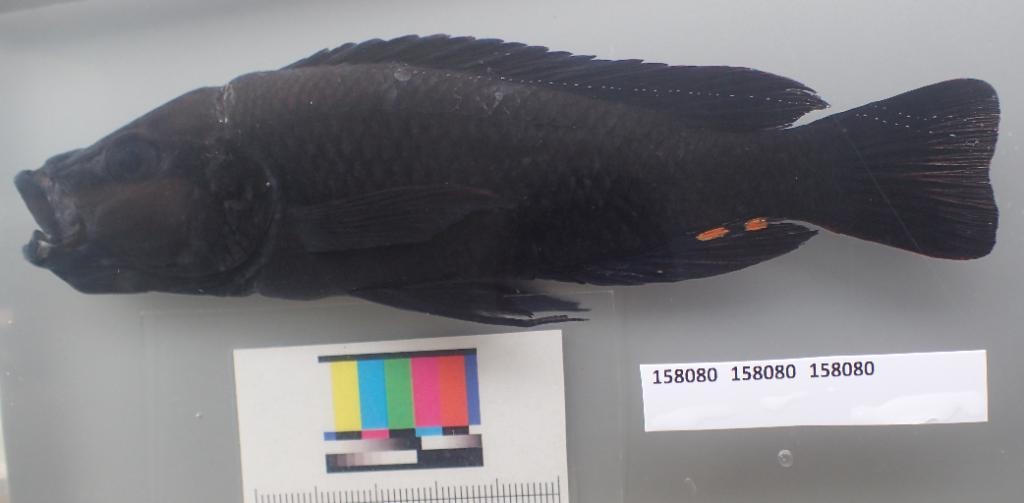
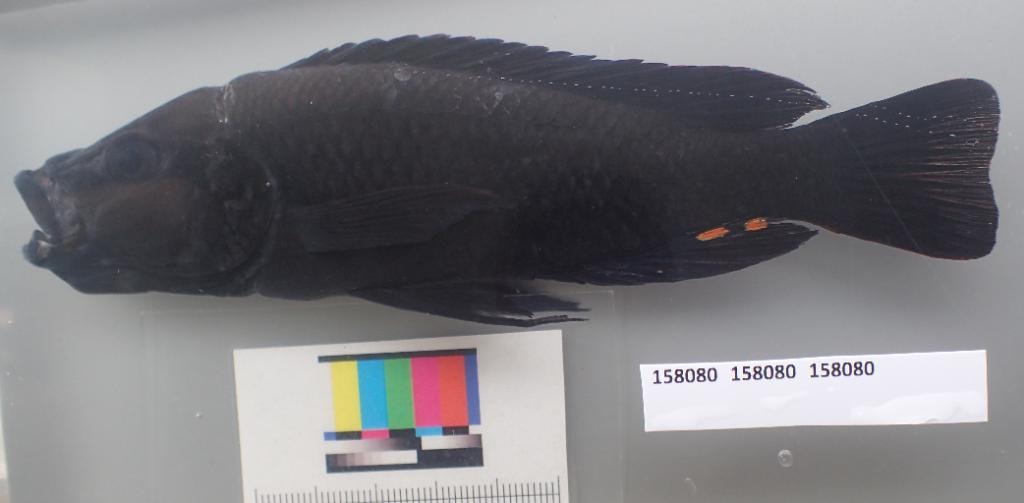
Lipochromis sp. "velvet black cryptodon" male, northwest refugial specimen, 2017 (catalog no. 158080). The deep, saturated melanic coloration — uniform across the flanks with only the paired orange egg-spots breaking the black — is the defining phenotype of this form.
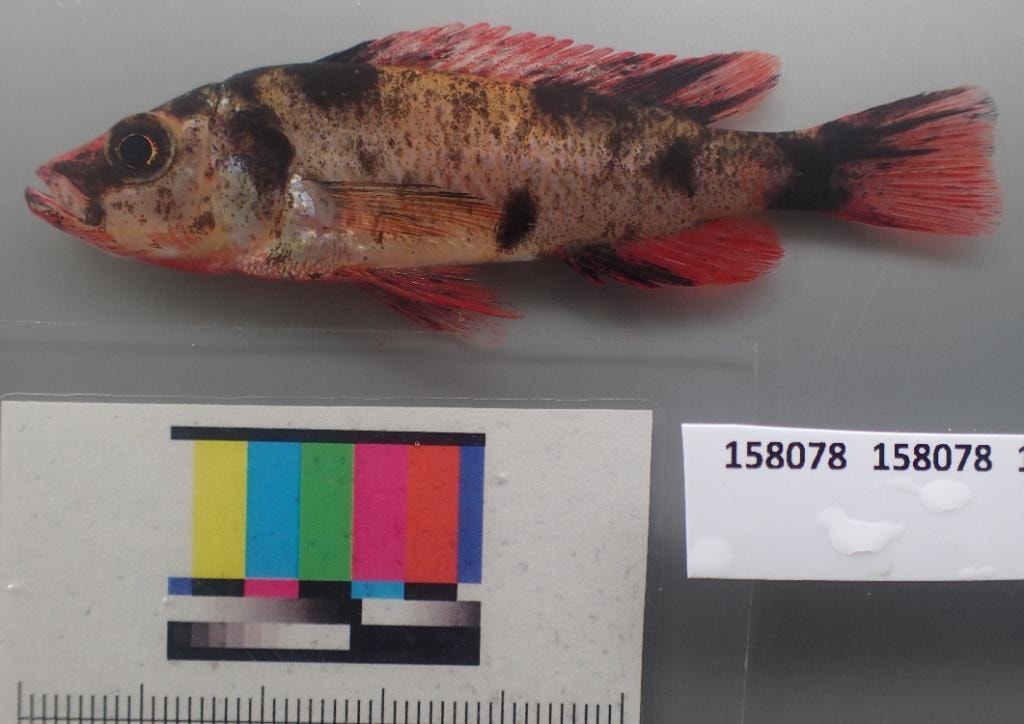
Lipochromis sp. "velvet black cryptodon" OB female, northwest refugial specimen, 2017 (catalog no. 158078). The orange-blotched phenotype is characteristic of cryptodon females and is the phenotype that anchors the cross-regional comparison with the Sozihe Island population from the early 1990s. The striking similarity between OB females across a 25-year interval and across two distant regions of Lake Victoria demonstrates the stability of this phenotype and the persistence of the reproductive guild beneath it.
Cryptodon is the stealth paedophage — a slow-approach, targeted-strike predator that relies on dense brooding aggregations and predictable parental care. It is one of the most behaviorally demanding paedophages in the radiation. The species cannot survive in systems where brooding females are rare, stressed, or inconsistent. Its persistence is therefore diagnostic of ecosystem health.
The two northwest specimens from the 2017 survey show the same morphological and melanic logic seen in the Sozihe Island population photographed in the early 1990s. The OB females are nearly identical: the same blotch geometry, the same melanic distribution, the same subdued contrast. This is not drift. This is not coincidence. This is evidence of a stable reproductive landscape supporting a stable paedophage phenotype across decades and across the lake.
The Sozihe male — the classic "velvet black cryptodon" — anchors the phenotype historically. Its deep, saturated melanic fields and muted bar structure match the northwest specimens almost perfectly. This continuity proves that cryptodon was never a local oddity. It was a lakewide paedophage lineage that persisted wherever the reproductive guild remained strong.
Cryptodon's presence in both the northwest refugia and the Sozihe region demonstrates that the Mass Extinction narrative rested on non-comprehensive collections. Those surveys documented absence in the collapse zones, not extinction across the lake. The species is not a remnant. It is a witness.
Lipochromis microdon — The Microdon Complex
Lipochromis microdon complex, northwest refugial specimen, 2017. Once abundant in Mwanza Gulf and long presumed extinct after the Nile perch explosion, microdon survived in reduced numbers and shifted its distribution enough to evade decades of infrequent sampling. This specimen confirms that microdon persisted outside the collapse zones and remained part of a functioning paedophage guild.
The microdon complex represents the fine-mouthed, precision-strike end of the paedophage spectrum. These predators take only a few fry per strike but strike frequently, a strategy that requires extremely high fry production and dense brooding aggregations. When the Nile perch devastated the reproductive guild in Mwanza Gulf, microdon collapsed locally — but not lakewide.
For more than thirty years, the species was treated as extinct. The Victorian hobby repeated the claim, scientific summaries repeated it, and conservation groups repeated it. Yet the 2017 northwest specimen proves that microdon persisted at normal density in the refugial zones. The rediscovery in 2023–2024 in southern Mwanza was not a "return from extinction" — it was simply the first time collectors had looked in the right place again.
The disconnect between the scientific hobby and the actual scientific record is illustrated perfectly by the 2023 article claiming microdon's rediscovery. By that time, multiple researchers had already examined the 2017 material, confirmed the species' identity, and recognized that microdon had survived outside the collapse zones. But information about Victorian cichlids is often siloed, guarded, or shared only within narrow circles. As a result, critical findings can remain invisible to the broader community for years.
The microdon complex never collapsed lakewide. It persisted wherever the reproductive guild remained strong. This single specimen is enough to undermine the extinction narrative and restore microdon to its rightful place as one of the most sensitive indicators of ecosystem health in Lake Victoria.
Lipochromis melanopterus
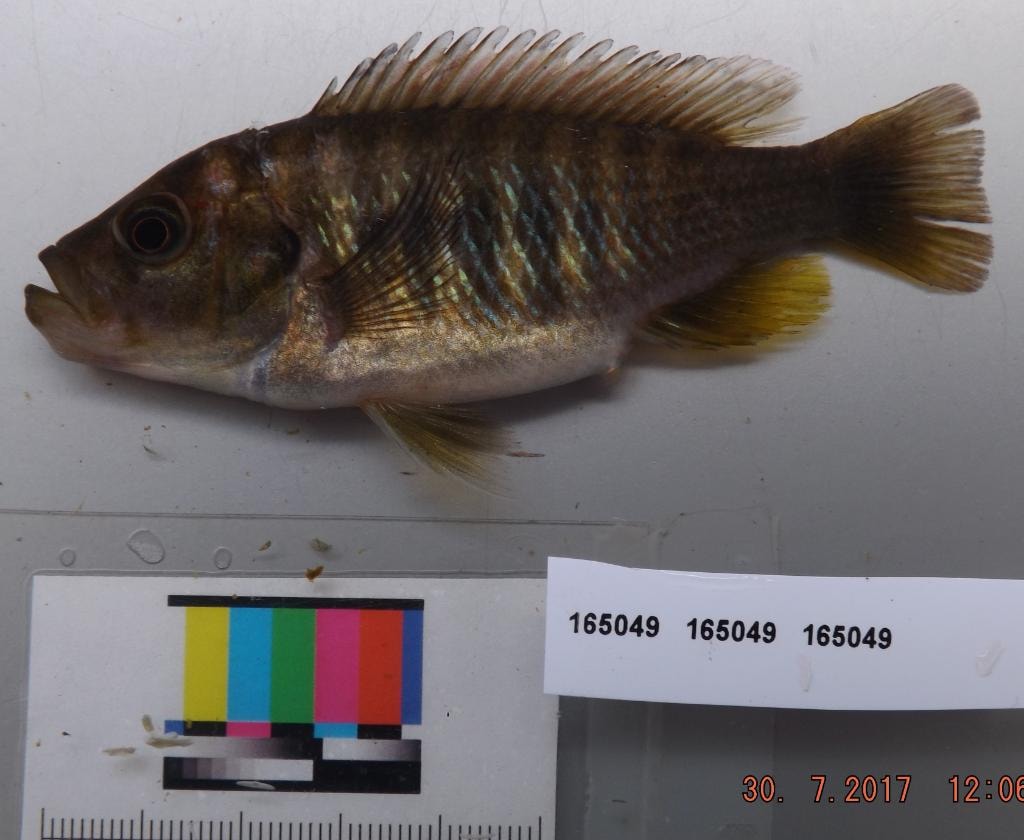
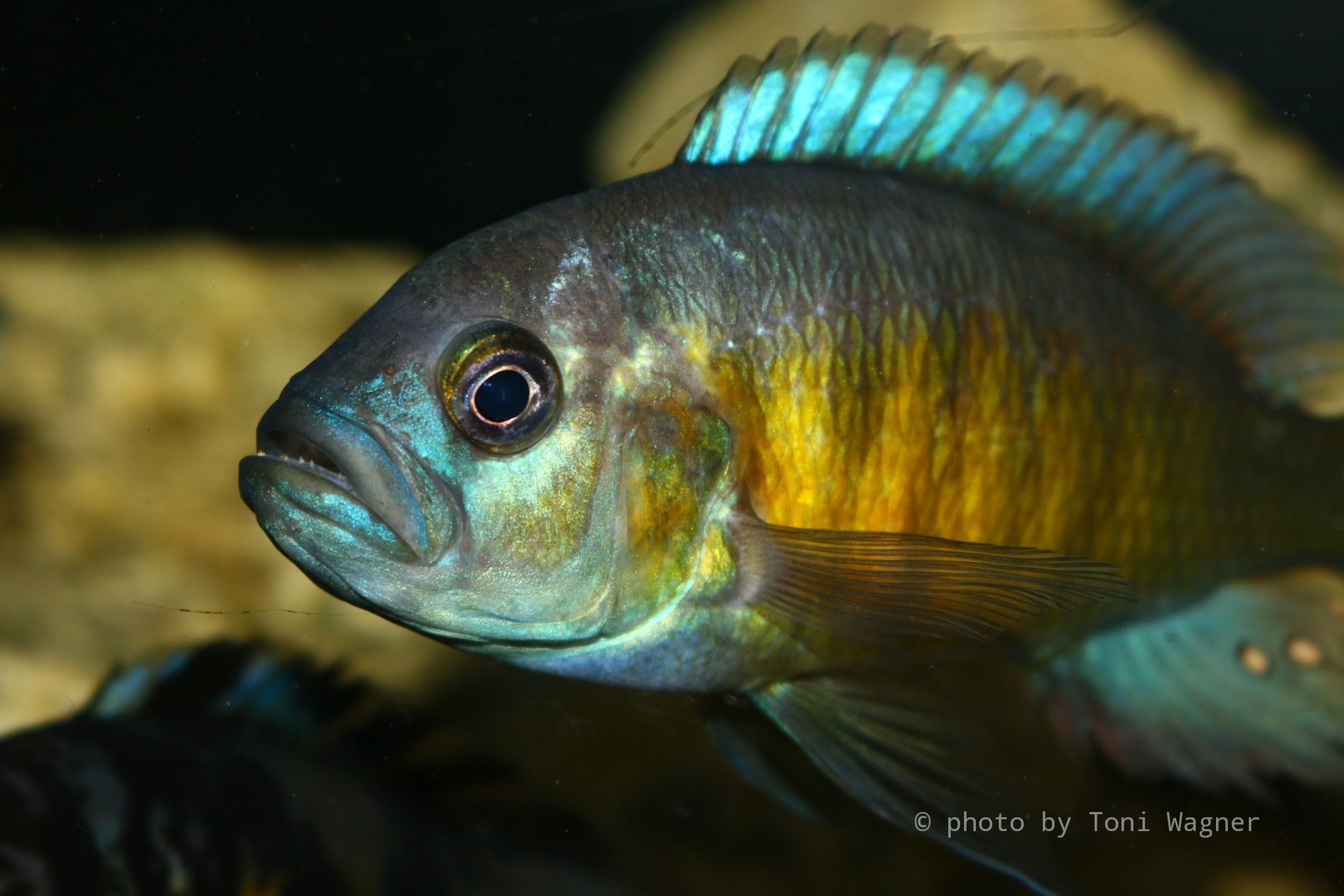
Lipochromis melanopterus, northwest refugial specimen, 2017 (catalog no. 165049). The iridescent blue-green scaling, barred flanks, and vivid yellow anal and caudal fin patches are characteristic of the species in fresh condition. Collected 30 July 2017.
Lipochromis melanopterus is the sleek, crepuscular paedophage — a stealth-strike specialist that relies on timing, low visibility, and predictable brooding behavior. Historically, the species was believed to have collapsed early in the Nile perch era, surviving only in small pockets around Makobe Island. The 2017 northwest specimen overturns that assumption. It proves that melanopterus persisted at normal density in the refugial zones, far from the collapse regions of Mwanza, Winam, and Napoleon Gulf.
The Makobe males illustrate the species' remarkable color range: metallic blues, golds, and deep greens that shift with angle and light. These forms were long thought to be local variants, but the Napoleon Gulf female — misidentified for decades as Lipochromis cryptodon — reveals a deeper truth. Melanopterus was always a lakewide species. Its presence in the north, south, and northwest shows that the reproductive guild beneath it remained intact across multiple refugial landscapes.
A sidebar to the species' history is the near-collapse of the LVSSP conservation population. The program lost most of its melanopterus stock and had to appeal to the Victorian hobby community for enough individuals to rebuild the population above fifty — their minimum viable threshold. Thanks to hobbyists, the species survived. Today melanopterus is healthy in captivity, stable around Makobe, and now confirmed in the northwest. Its persistence across regions and decades is one of the strongest indicators that the reproductive guild — and therefore the lake's evolutionary engine — never collapsed lakewide.
Lipochromis obesus
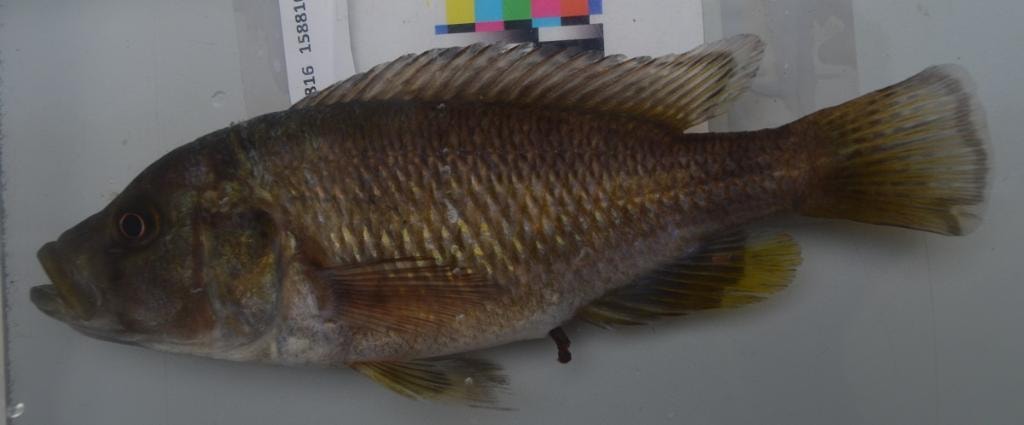
Lipochromis obesus, northwest refugial specimen, 2017 (catalog no. 158816). This is the first known photograph of the species. No live images exist, no hobby lineage was ever established, and the species was never illustrated in any major monograph. The specimen represents the only modern visual record of one of Lake Victoria's most demanding paedophages.
Lipochromis obesus is the force-strike paedophage — the heavy-jawed predator that triggers large fry expulsions with powerful, targeted blows. This strategy requires enormous reproductive output beneath it: dense brooding aggregations, high fry production, and stable parental care behavior. Its presence in the northwest refugia is extraordinary. It proves that the reproductive guild was not merely present but flourishing.
This single photograph rewrites the history of the lake's most demanding predator. It shows that the trophic architecture of the refugial system remained intact long after the collapse zones had transformed. Obesus was not a ghost species. It was simply living where the reproductive guild remained strong.
Lipochromis sp. "Matumbi hunter"
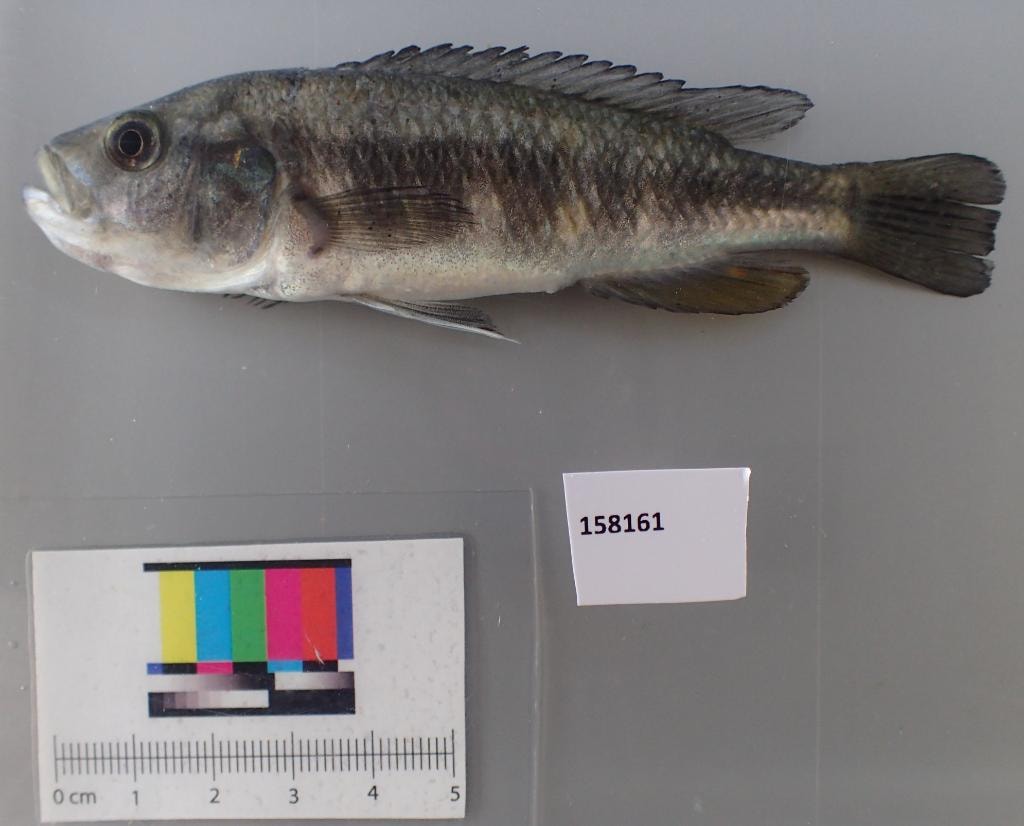
Lipochromis sp. "Matumbi hunter", northwest refugial specimen, 2017 (catalog no. 158161). Historically confined to the Matumbi Island region of southern Mwanza Gulf and long assumed to be a near-extinct remnant lineage, this species was believed restricted to a single bottlenecked population hammered by Nile perch and eutrophication. Its appearance in the 2017 northwest survey is one of the most surprising findings in the history of Lake Victoria paedophages.
The Matumbi hunter is the most unusual paedophage in the radiation. Unlike the precision-strike microdon types or the force-strike obesus, it is a flexible predator that does not rely exclusively on fry predation. It will take fry opportunistically, but it does not relish them, and newly released broods can often survive in tanks even when adults are present — a behavioral anomaly among paedophages. It also hunts in coordinated groups, a rare behavior in the Victorian radiation and unique among paedophages.
Historically, this lineage survived only by the narrowest margin, confined to a single island refuge and pushed through a severe genetic bottleneck. Its presence in the northwest proves that the lineage was never restricted to the south, that it once had a lakewide distribution, and that it persisted wherever the reproductive guild remained strong. This single specimen is enough to undermine the lakewide extinction narrative and force a reevaluation of the historical biogeography of the paedophage guild.
What the Paedophages Reveal
Taken together, the northwest collections dismantle the Mass Extinction narrative. They show that the reproductive guild did not collapse lakewide, that parental care remained intact in the refugial zones, and that the trophic architecture of the lake persisted wherever ecological stability survived. The paedophages were not ghosts of a vanished system; they were indicators of one that endured.
Their diversity in 2017 — cryptodon, microdon, melanopterus, obesus, and the Matumbi hunter — represents every major paedophage strategy known from the radiation. This is not the signature of a remnant. It is the signature of a complete guild. And a complete paedophage guild can only exist above a complete reproductive guild.
The absence of Lipochromis parvidens does not contradict this picture. It refines it. It reveals that the refugial system was structured, not uniform, and that different paedophages persisted in different reproductive landscapes. The northwest supported one suite of specialists. The north-central littoral supported another. The southern islands supported a third. The hobby preserved a fourth. This is exactly what one would expect from a radiation that survived in fragments rather than collapsing as a whole.
The paedophages rewrite the history of Lake Victoria. They show that the lake did not lose its evolutionary engine everywhere, and that the reproductive guild — the foundation of the entire haplochromine radiation — remained intact in the regions that escaped the worst ecological damage. They reveal that the extinction narrative was built on incomplete collections, and that the lake's evolutionary logic persisted long after the collapse zones had been transformed.
The story of Lake Victoria is not a tragedy. It is a mosaic. And the paedophages are the key to reading it.
The predators recovered in the 2017 and 2018 survey are not isolated survivors. They are the visible crest of a structure that reaches downward into the reproductive guild and outward into every prey community that sustained them. Their persistence makes sense only when seen alongside the pursuit hunters of the piscivore guild and the reproductive specialists of the paedophage guild. Together, these three accounts form a single story: the refugia that sheltered the hunters also sheltered the brooding females, and the brooding females sustained the predators that depended on them. Readers who wish to follow the full arc of this narrative — from the midwater pursuit forms to the reproductive parasites that anchor the lake's evolutionary engine — will find the companion articles on the piscivores and the predator-radiation synthesis linked below.