Field Survey
The Predator Guild of Lake Victoria: A Continuous Narrative of Survival
For forty years, everyone believed Lake Victoria''s predators were gone. They weren''t. They were living in refugia no survey ever mapped — and this is the first continuous account of their survival.
This article describes one half of the predator guild. For the reproductive predators, see the companion paedophage article. For the complete narrative of how both guilds survived, see the predator‑radiation synthesis.
Lake Victoria's predator radiation has been treated as a ghost story for forty years — a vanished guild, a collapsed lineage, a trophic structure erased by Nile perch. But the truth is entirely different. The predators survived. They survived in places science never looked, in corridors no survey ever mapped, in refugia no institution ever recognized. This article is the first continuous account of that survival.
The Two Refugia
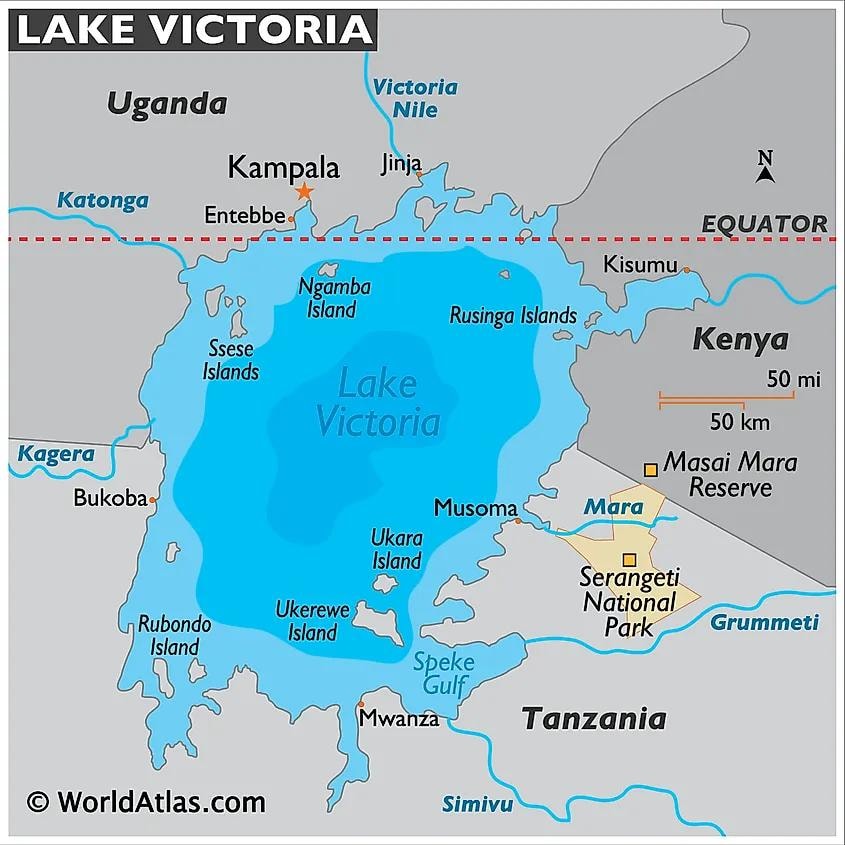
The predator radiation of Lake Victoria did not collapse. It persisted in two refugial zones that remained invisible to the scientific community for forty years. The first was the northern Uganda offshore midwater shelf, a region west of Ngamba Island and east of the Ssese and Kigara archipelago. The second was the rocky channel complex of the Ssese and Kigara islands themselves. These two zones preserved the entire predator guild — from the midwater pursuit hunters to the rocky channel strike predators, from the dentex forms to the deep slope specialists, from the benthic crushers to the riverine apex predators.
The Ancestral Baseline: Harpagachromis guiarti Complex
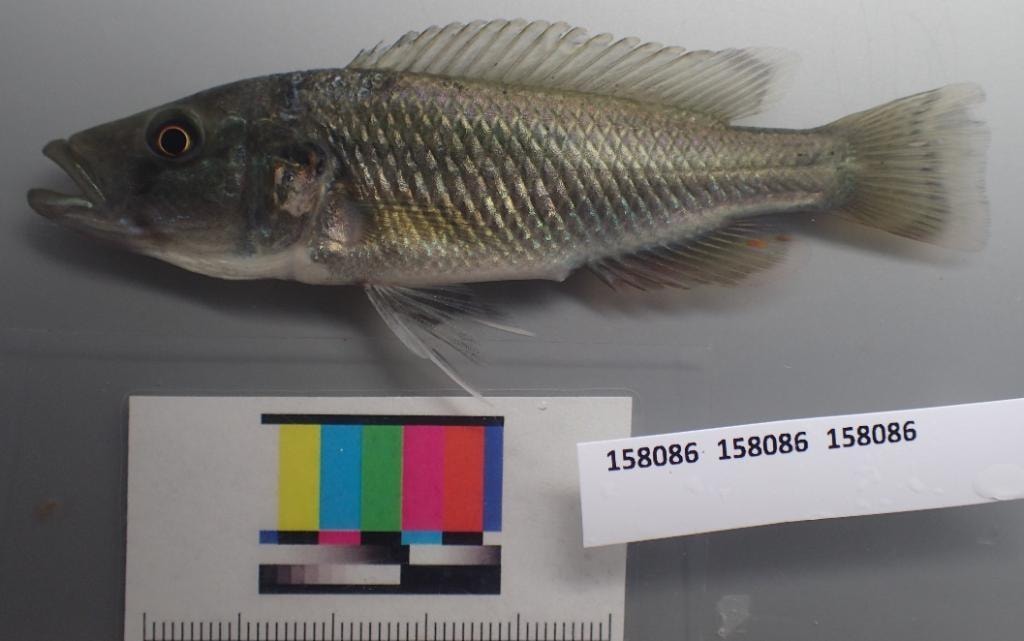
The continuity of the predator radiation begins with the Harpagachromis guiarti complex, the ancestral long-snouted piscivore. The specimen tagged 15693 was captured on the first day of the survey. Its presence proves that the original long-snouted baseline predator lineage never died out. It survived exactly where the midwater prey community remained stable. This fish is the foundation of the radiation, and its survival sets the tone for everything that follows.
The Deepwater Guild
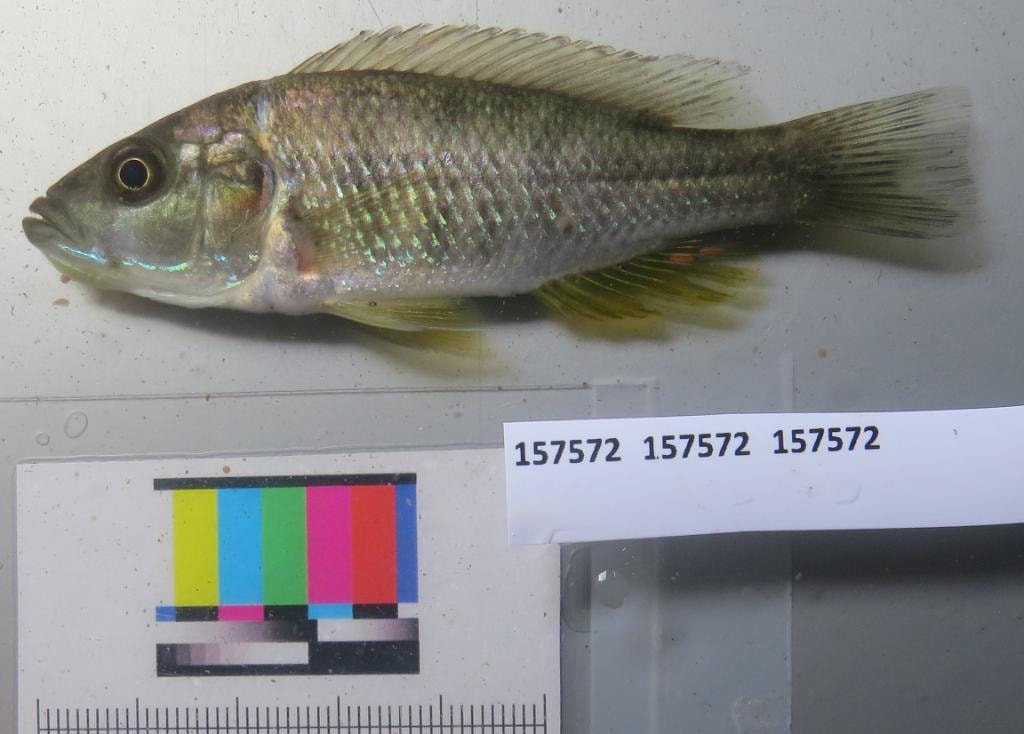
The specimen tagged 157183 represents the macro-eyed deepwater piscivore. This predator lives in the benthic shelf zones that academic trawling never reached. Its large eyes and crepuscular ascent behavior show that it hunts in low-visibility conditions where Nile perch cannot dominate. Its presence proves that the deepwater predator guild remained intact.
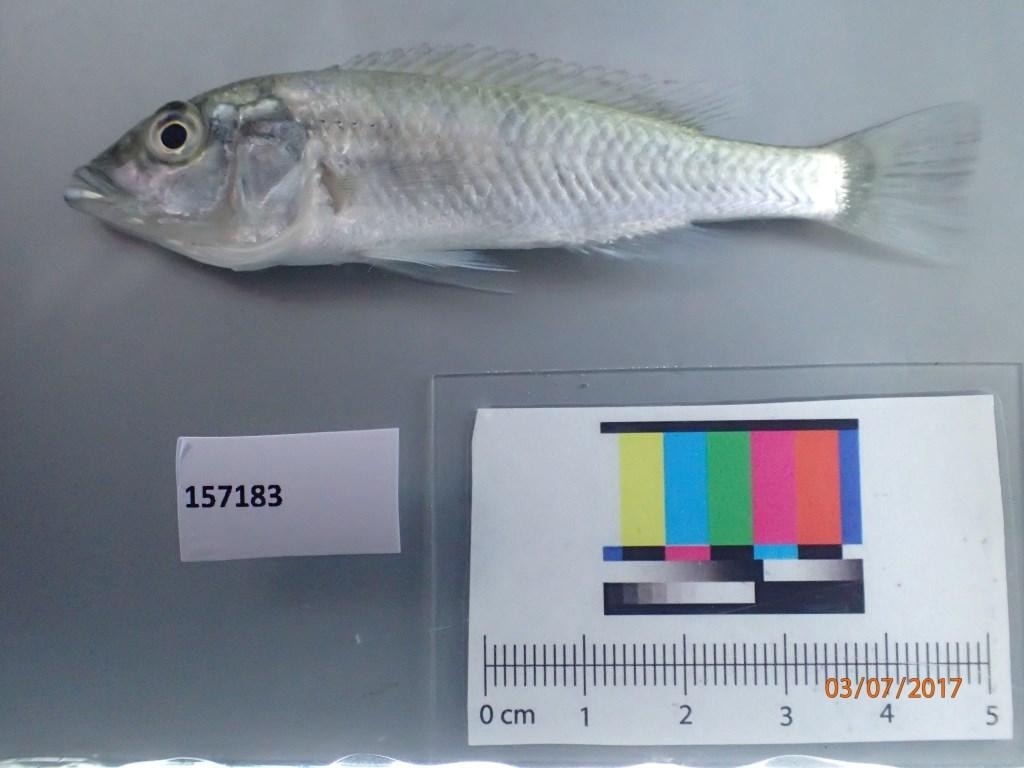
The deep slope predators — including the macro-eye forms and the benthic slope strike hunters — survived because perch cannot hunt in the oxygen gradients of the deep slope. These predators ascend at dusk to feed in the midwater zone, then retreat to the deep slope where perch cannot follow.
The Benthic Specialist Community
The benthic specialist predators tagged 157236 and 157237 were captured in the same afternoon net haul. Their identical morphology and sequential tags prove that this lineage is not a chaotic hybrid mixture. It is a true-breeding benthic predator community that persisted alongside the perch. Their stability is evidence of ecological continuity.
Harpagachromis howesi, Harpagachromis sp. 'broad mouth,' Harpagachromis sp. 'dwarf,' and the deepwater forms represent the full rocky channel and benthic predator guild. These species survived because perch cannot hunt efficiently in rocky channels, cannot recruit in exposed littoral zones, and cannot mimic the specialized morphologies of benthic crushers and crab eaters.
Harpagachromis serranus: Ontogenetic Diversity Intact
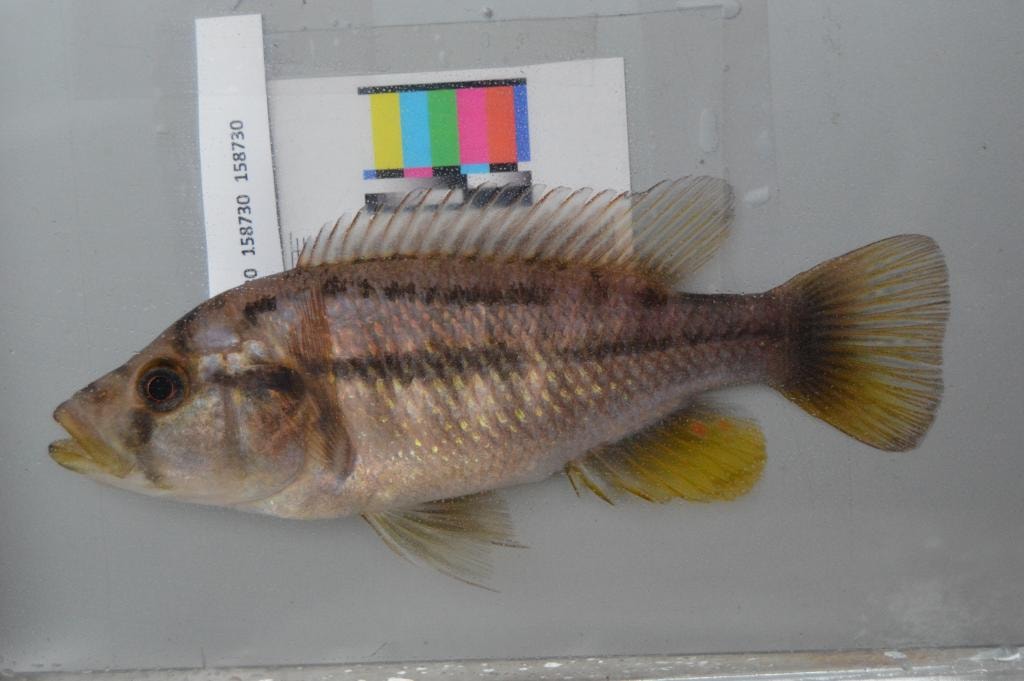
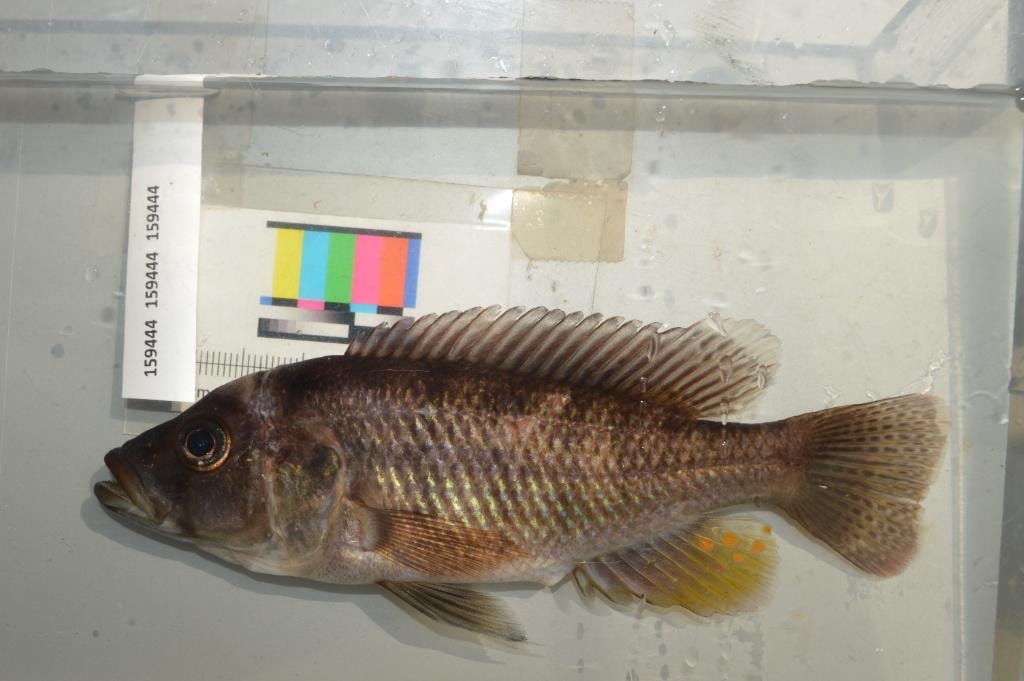
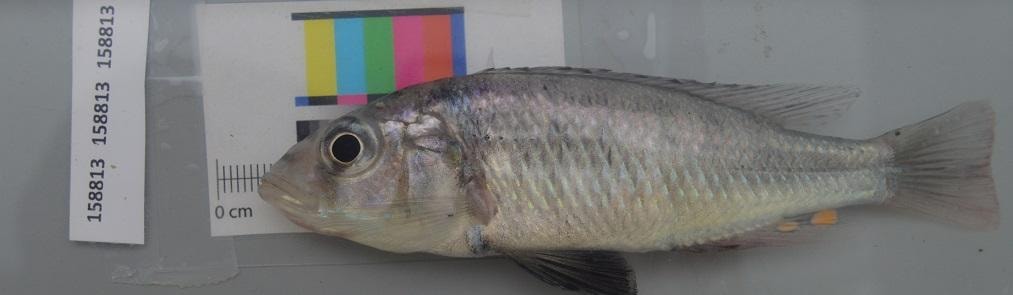
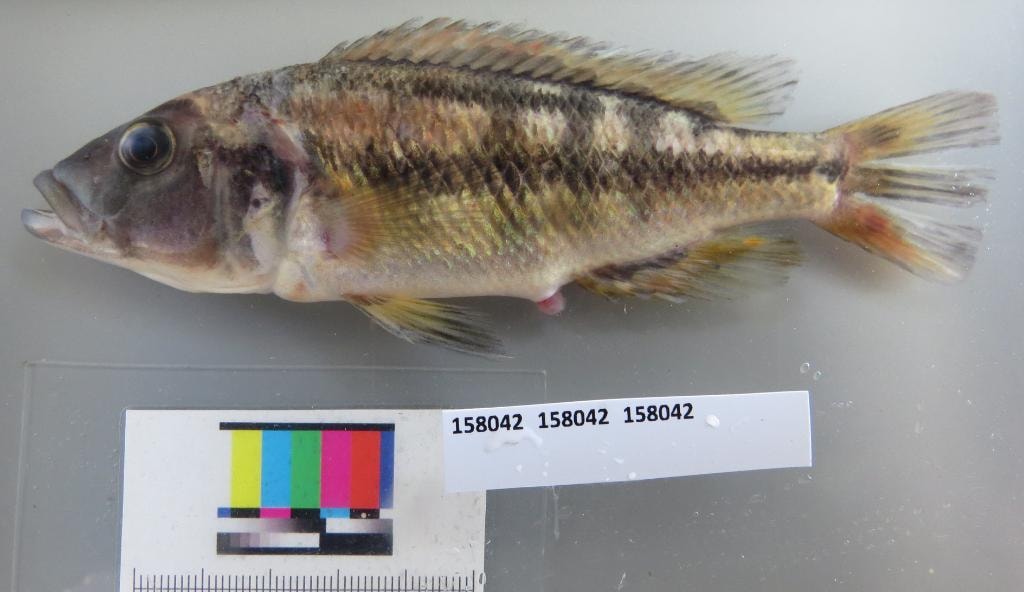
Harpagachromis serranus appears twice in the survey — once in a dusky phase at tag 157602 and once in a patterned phase at tag 158042. These two specimens represent the full developmental and color spectrum of a species long assumed extinct. Their presence in both the early survey sector and the transition corridor proves that serranus survived in multiple habitats and retained its ontogenetic diversity.
The Delta Predator: Frog-Mouth Form
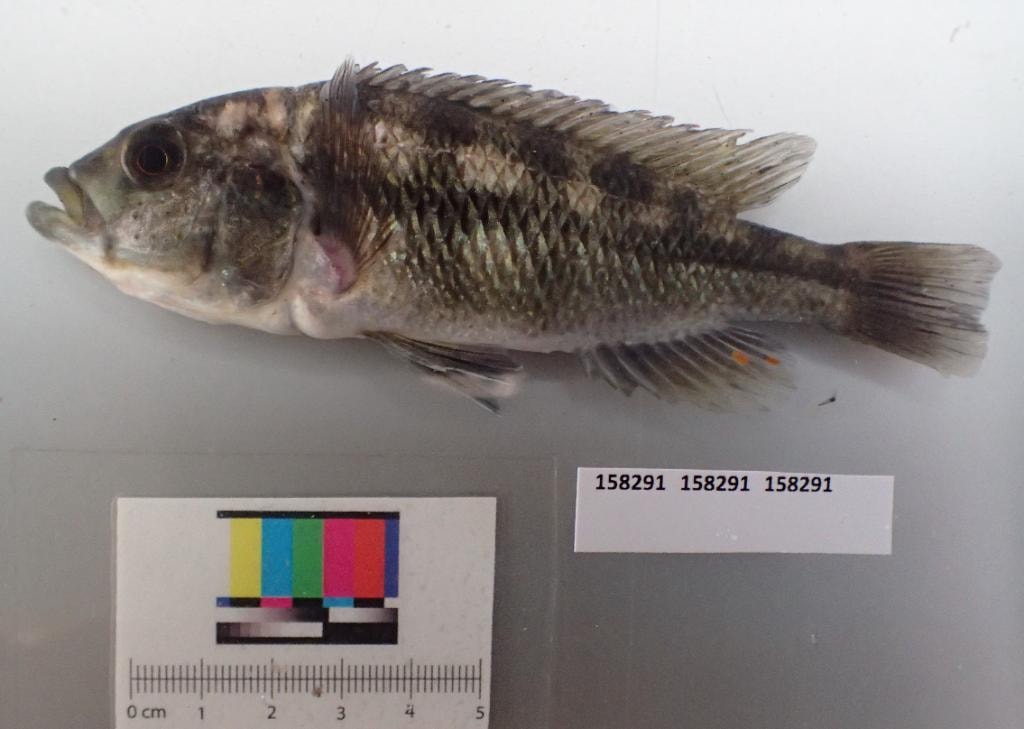
The frog-mouth predator at tag 158291 represents a specialized ambush hunter adapted to muddy, high-turbidity river deltas. Its flattened underbite jaw architecture is unlike any other predator in the radiation. Its presence in Rubafu Bay shows that the delta predators persisted in the turbidity corridors where perch cannot hunt effectively.
Harpagachromis pachycephalus: A Historic Rediscovery
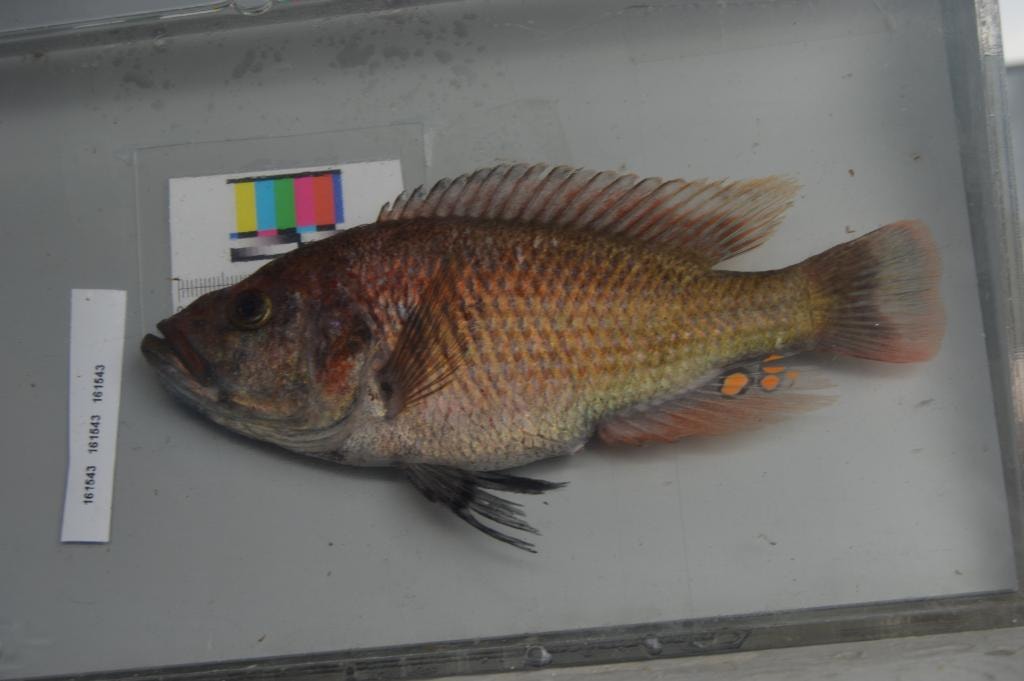
The broad-mouth predator at tag 158444 is the true Harpagachromis pachycephalus. This specimen was captured in the rocky inner channels of the Ssese archipelago. Its massive jaws and crushing dentition show that the benthic crusher guild survived exactly where the benthic prey community remained stable. This is a historic rediscovery of a major predator lineage.
Harpagachromis altigenus
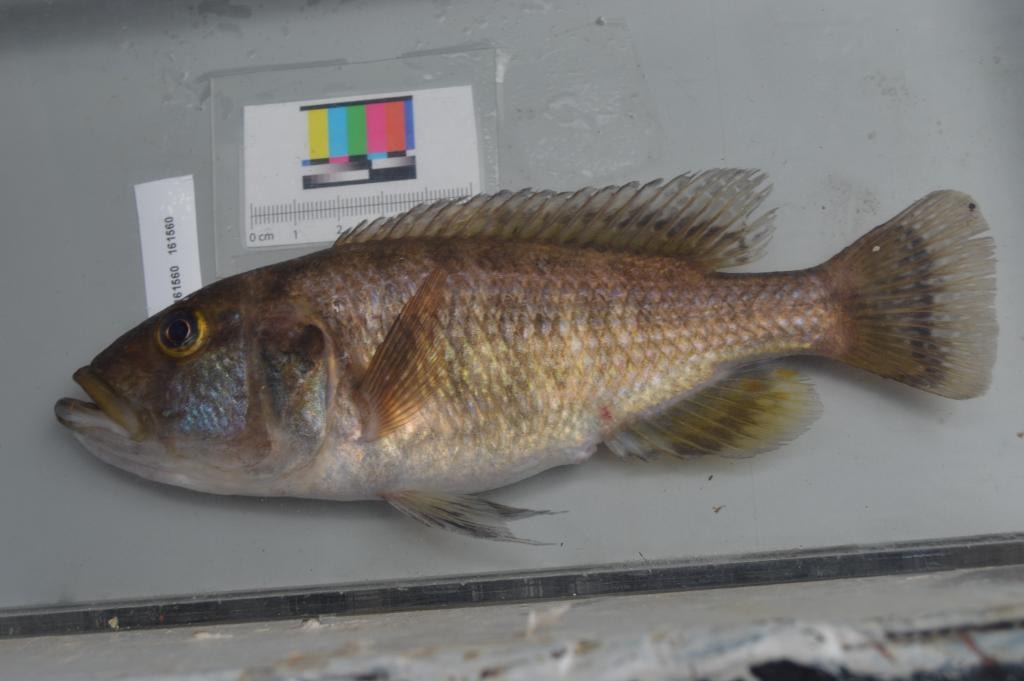
Harpagachromis altigenus appears at tag 161560. This specimen displays the distinct concave snout and sloping cranium that define the species. Its presence confirms that a lineage long declared extinct persisted in the intermediate survey track, where rocky structure and turbidity protected it from perch.
Pyxichromis parorthostoma and the Structured Littoral
Pyxichromis parorthostoma adds another dimension to the story. This predator is adapted to structured littoral zones and survived because its prey remained abundant in the rocky corridors of the Ssese and Kigara islands.
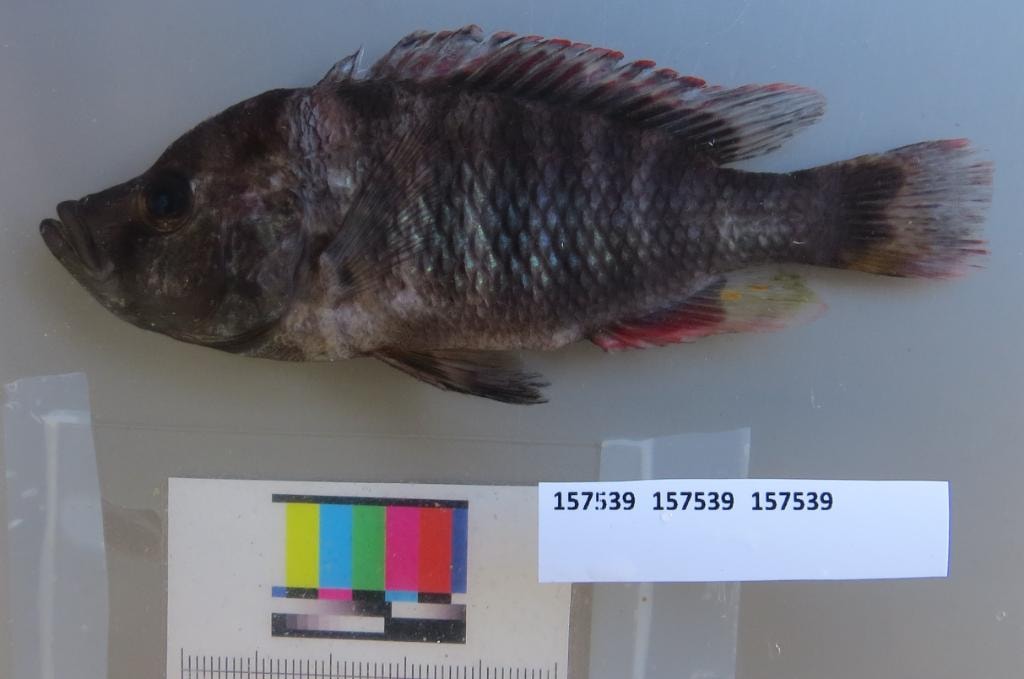
The Dentex Guild
The dentex predators — including the green dentex, the dwarf dentex, and the large dentex forms — represent a hybrid strategy of midwater pursuit and littoral strike behavior. Their moderate to heavy dentition and straight snouts show that they specialize in prey size rather than prey type. Their presence in both refugia proves that the dentex guild remained intact.
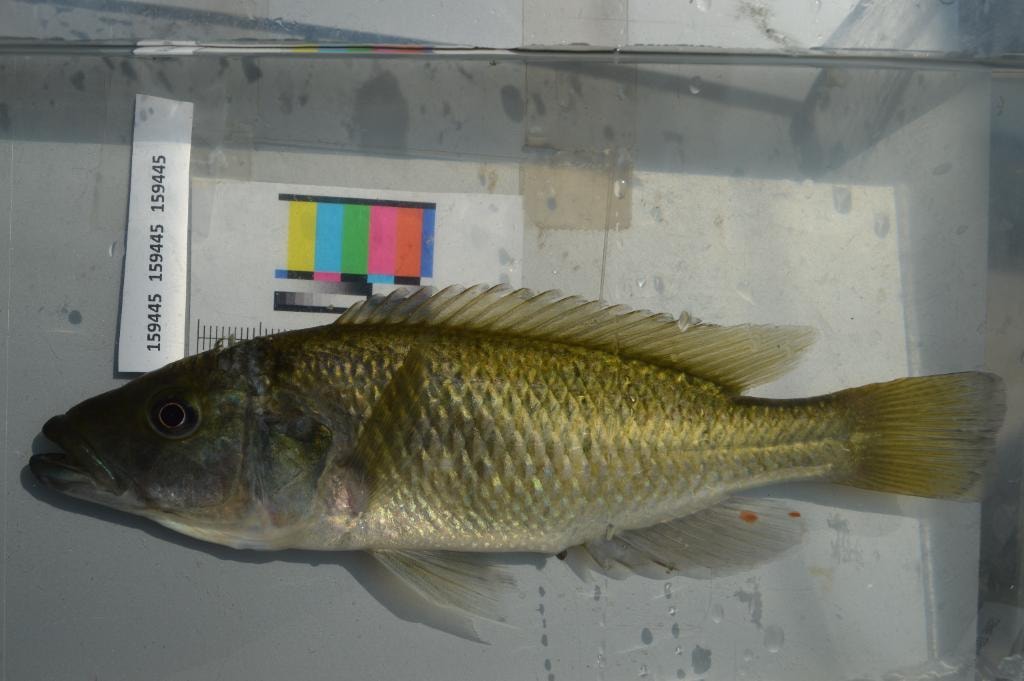
Prognathochromis perrieri: The Iridescent Midwater Predator
The iridescent midwater predator known as Prognathochromis perrieri survived in the turbidity-compressed midwater prey bands of the northern offshore shelf. Its blue-green iridescence and red fin margins are adaptations to the light gradients of the midwater zone. Its presence proves that the midwater iridescent guild persisted.
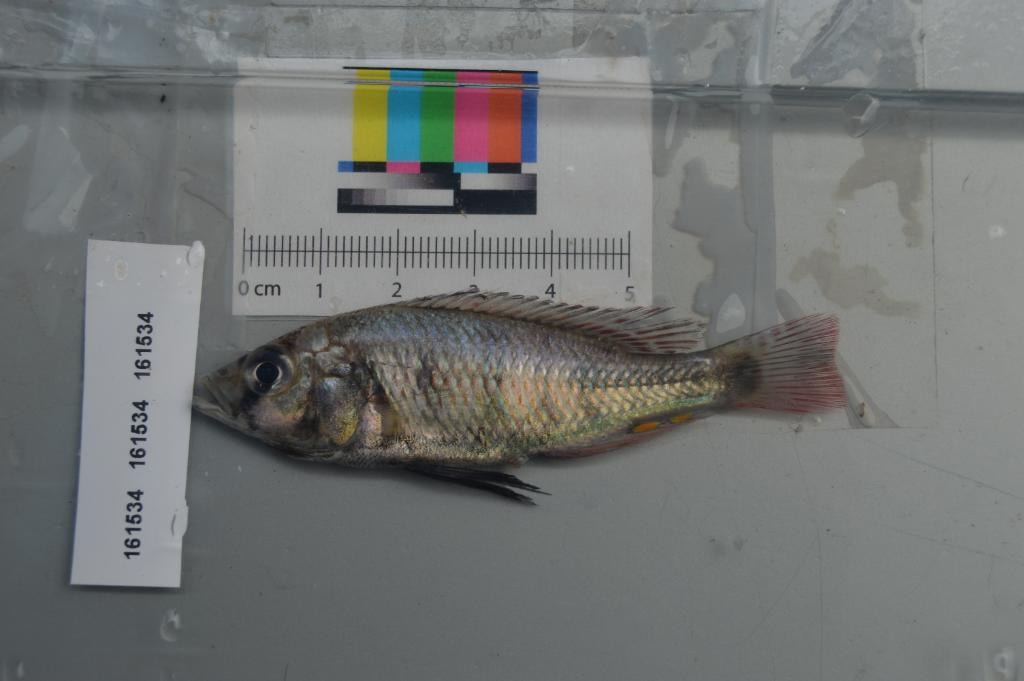
The Midwater Pursuit Predators
The midwater pursuit predators — including Prognathochromis mento and Prognathochromis longior — survived because the northern offshore shelf is not a perch nursery, not a perch hunting zone, not a perch recruitment zone, and not a habitat perch can dominate. These predators rely on speed, acceleration, and crepuscular activity. Their presence proves that the midwater corridor remained intact.
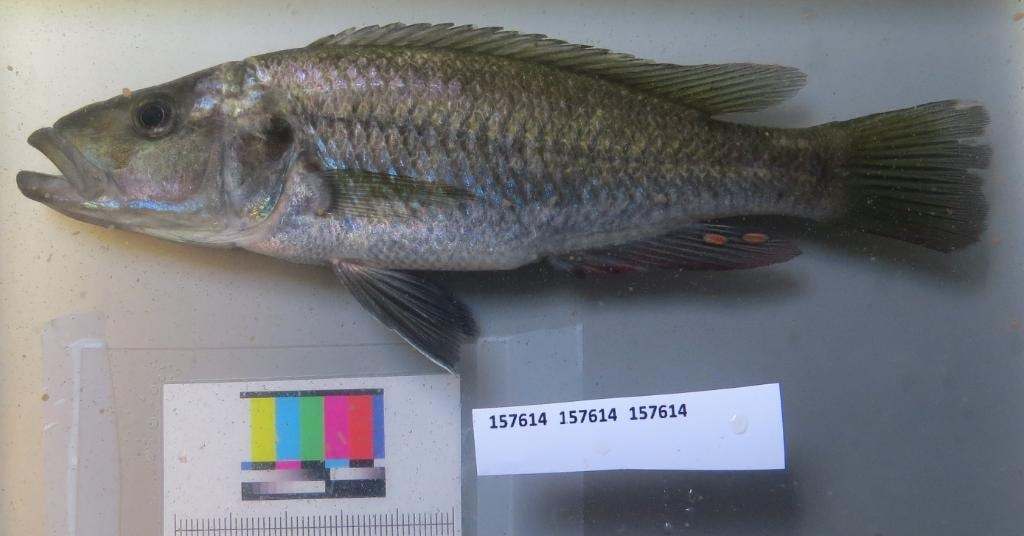
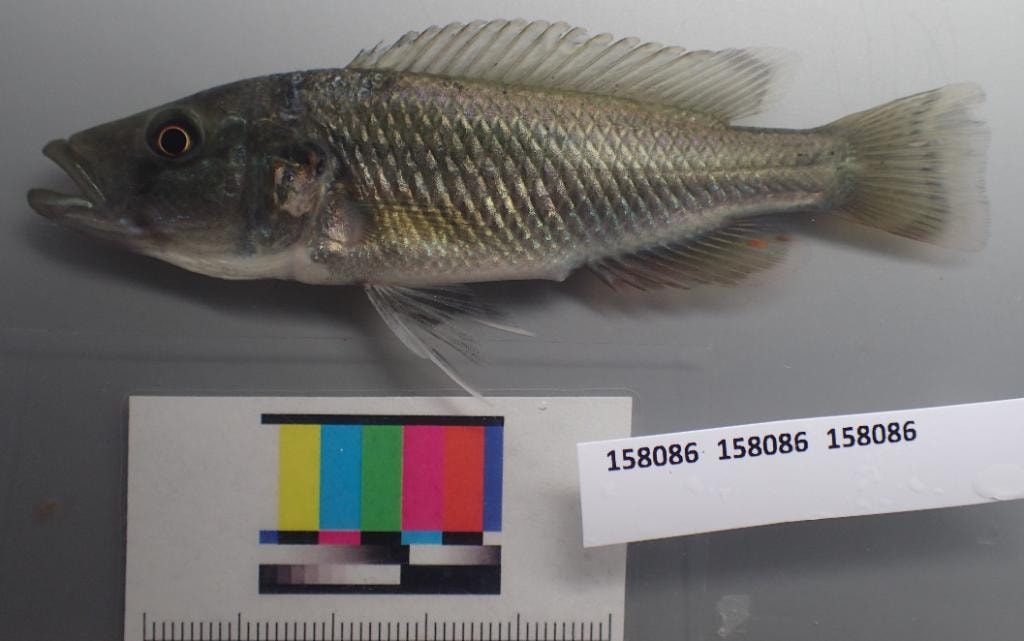
The midwater strike predators, including H. serranus and H. guiarti, survived in the rocky channel zones of Ssese and Kigara. Their angular snouts and robust jaws are adaptations to ambush strikes along channel edges. Their presence proves that the rocky channel predator guild remained intact.
The Riverine Apex: Haplochromis vonlinnei
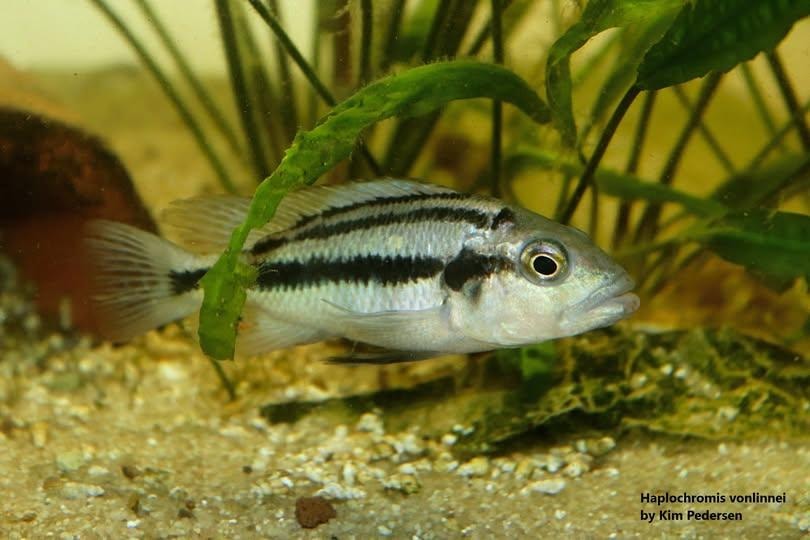
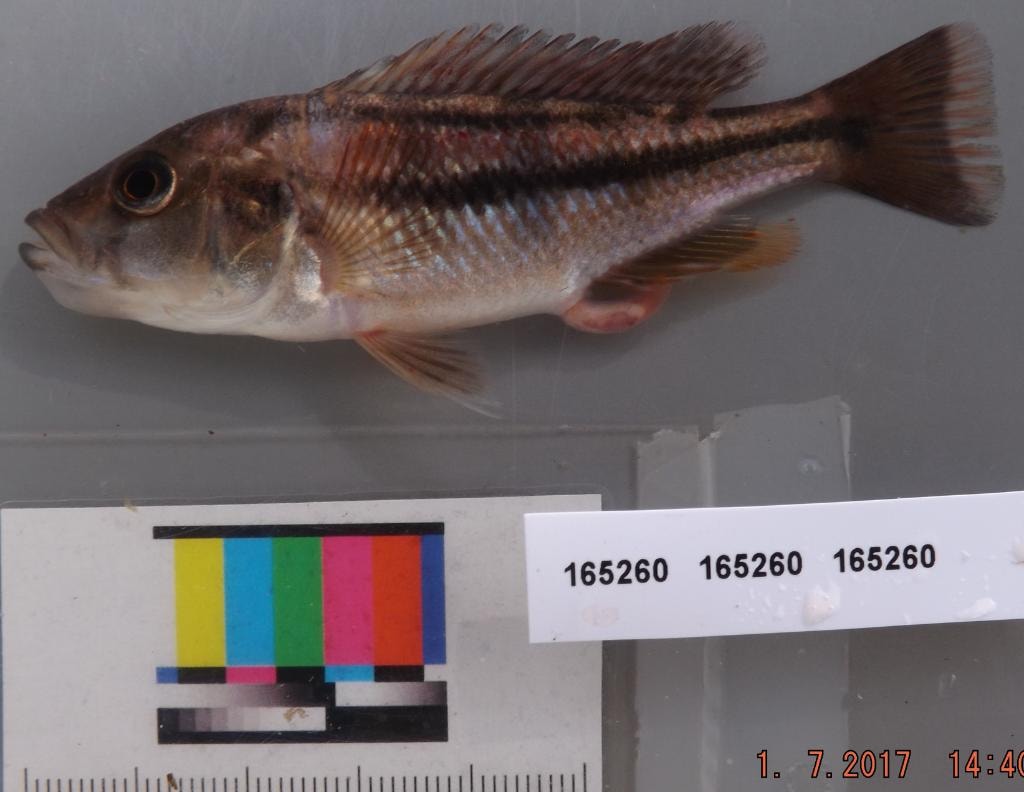
The riverine apex predator Haplochromis vonlinnei, tagged 165260, is the final and most important specimen. This fish was captured in the pre-western river basin on July 1, 2017. Its presence breaks the IUCN classification of possibly extinct. It proves that the riverine predator guild survived in the oxygen-stable, turbidity-protected river corridors.
A Single, Unbroken Narrative
Taken together, these predators form a continuous narrative of survival. They show that the predator radiation did not collapse. It persisted in the northern offshore midwater shelf and the rocky channel complex of the Ssese and Kigara islands. It retained its morphological diversity, its ecological strategies, its trophic structure, and its lineage continuity.
The predator guild is the map of the lake. It reveals the refugia. It exposes the ecological boundaries. It preserves the history of the radiation. These predators form a single, unbroken narrative of persistence — and now, finally, we can read it.
The predators recovered in the 2017 and 2018 survey are not isolated survivors. They are the visible crest of a structure that reaches downward into the reproductive guild and outward into every prey community that sustained them. Their persistence makes sense only when seen alongside the pursuit hunters of the piscivore guild and the reproductive specialists of the paedophage guild. Together, these three accounts form a single story: the refugia that sheltered the hunters also sheltered the brooding females, and the brooding females sustained the predators that depended on them. Readers who wish to follow the full arc of this narrative — from the midwater pursuit forms to the reproductive parasites that anchor the lake's evolutionary engine — will find the companion articles on the paedophages and the predator-radiation synthesis linked below.